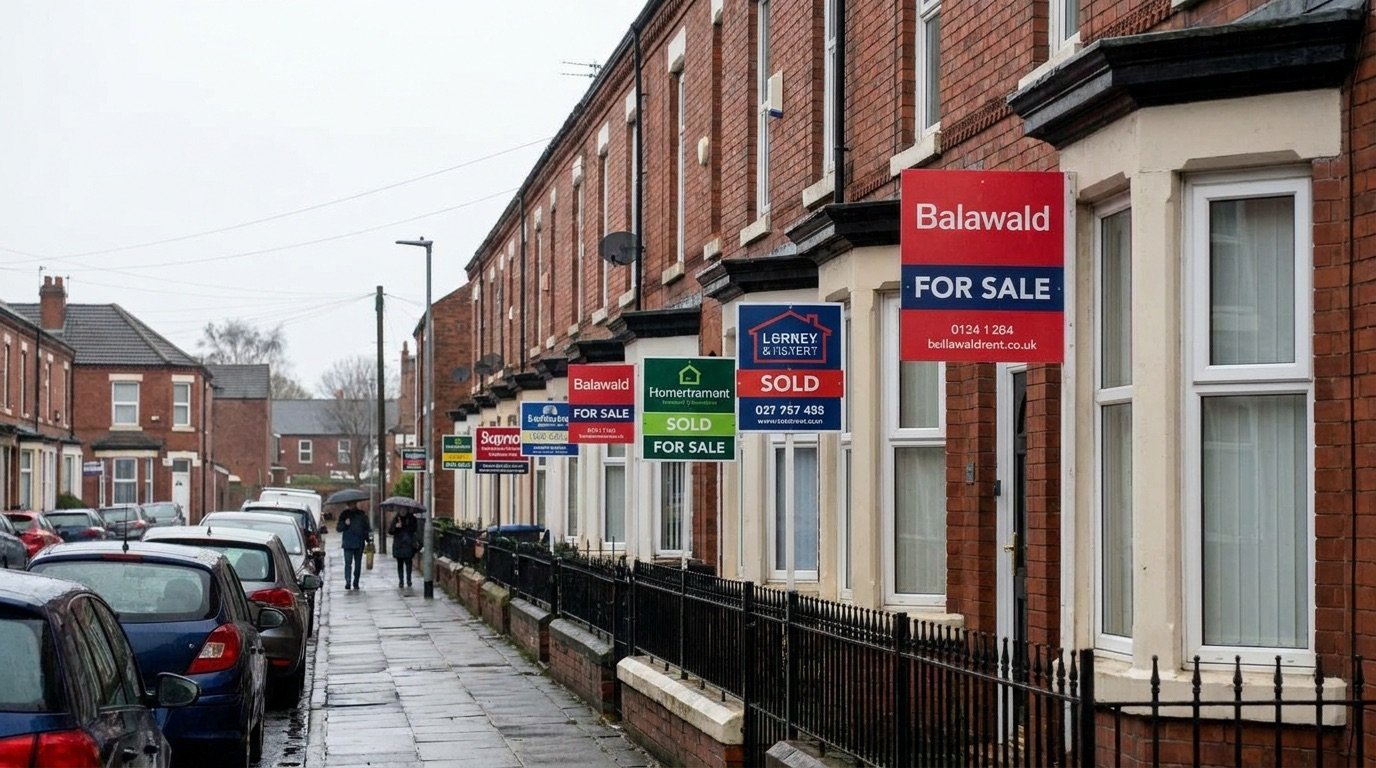
UK house prices flatline in May as a north-south divide hardens
Halifax says the typical home now costs just under £299,000 with annual growth of 0.5%, but the headline masks a stark split between a buoyant north and a weakening south.
Rajan Mehta
Writer ·
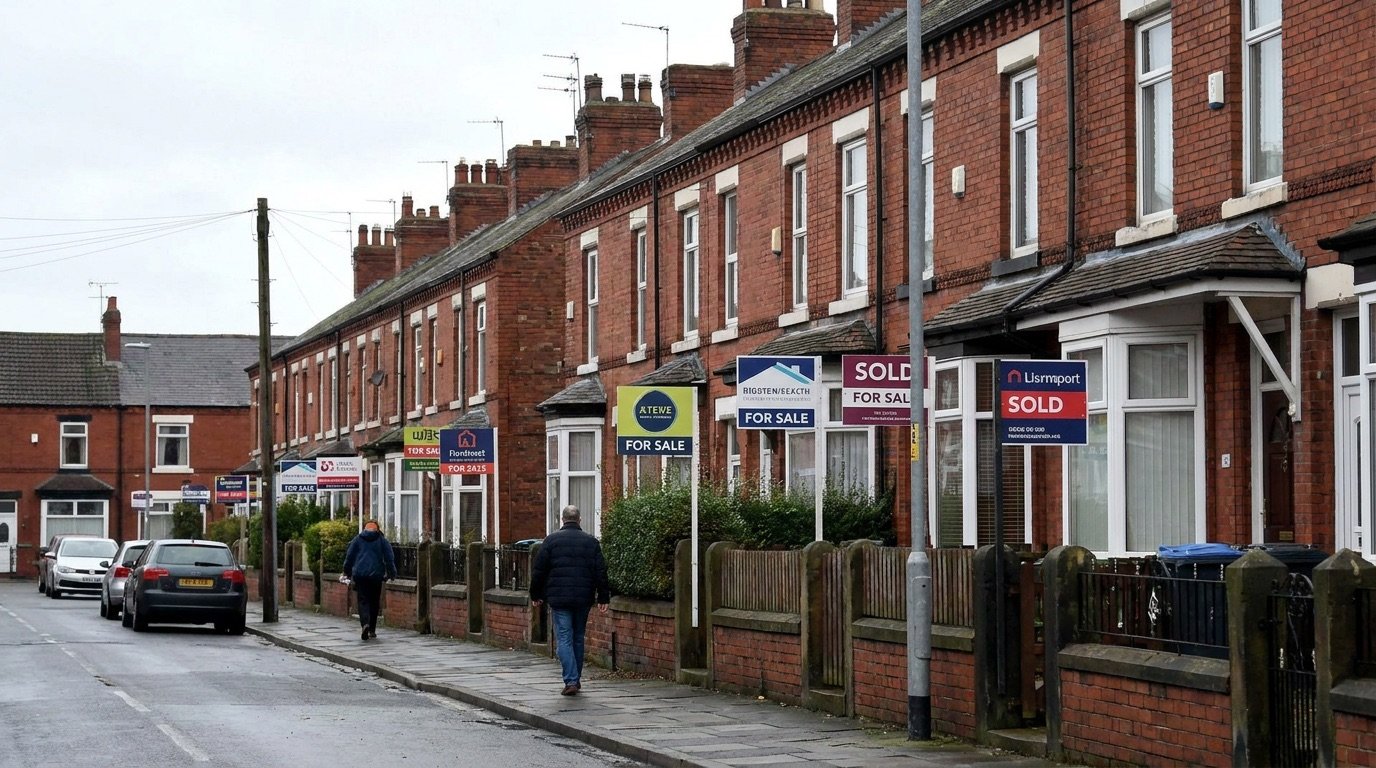
The UK housing market drifted close to a standstill in May, according to the latest figures from Halifax, with the average property edging down 0.1% on the month to £298,806. Annual growth ticked up only slightly, to 0.5%, leaving prices broadly where they were a year ago in nominal terms and falling once inflation is taken into account.
The picture from Nationwide was a touch warmer on the year, with its index showing annual growth of around 1.7%, though it too recorded a monthly dip of roughly 0.6%. The gap between the two indices is normal, reflecting different samples and methods, but the direction of travel is the same: a market that has lost momentum and is treading water rather than climbing.
Beneath the calm headline, however, lies a sharply divided country. The strongest growth is concentrated in the north and the devolved nations, while parts of the south, and London in particular, are in modest retreat.
A widening regional gap
Northern Ireland remains the standout performer, with annual growth of 7.8% taking the average price to around £227,000. Scotland followed with growth of 3.8% to roughly £223,000, while the North East and North West both posted gains of about 3%, with typical prices of £181,700 and £248,300 respectively.
At the other end of the scale, the South East led the declines, with prices down 2.1% over the year to about £383,000, while London values slipped 1.5% to around £534,000. The capital remains by far the most expensive part of the country, but its prices have been under pressure as affordability is stretched to its limits and higher borrowing costs bite hardest where homes cost the most.
The result is a market where a buyer's experience depends heavily on geography. In much of the north, demand is still outpacing supply and prices are rising; in the south, sellers are increasingly having to accept that the days of automatic annual gains are, for now, behind them.
- Northern Ireland: +7.8% annual growth, average about £227,000
- Scotland: +3.8%, average about £223,000
- North East: +3.1%, average about £181,700
- North West: +3.0%, average about £248,300
- South East: -2.1%, average about £383,000
- London: -1.5%, average about £534,000
Borrowing costs keep a lid on demand
The central reason the market has stalled is the cost of money. Mortgage rates have stayed higher than many buyers had hoped at the start of the year, with lenders pricing in expectations that inflation will be slow to fall and that the Bank of England will be cautious about cutting interest rates. Higher energy prices, partly linked to global tensions, have added to the inflation picture and reduced the scope for cheaper mortgages.
For first-time buyers, the squeeze is acute. The combination of high prices in the south, demanding deposit requirements and elevated monthly repayments has kept many would-be owners renting for longer. In the north, lower entry prices have left more room for the market to keep moving, helping to explain the regional split.
“Prices have been remarkably stable, but stability here means a market in balance rather than a market in good health. Affordability is doing the work that higher rates were designed to do, and it is doing it unevenly across the country.”
— Housing market commentator, paraphrasing the consensus view
What buyers and sellers are doing
Estate agents report that well-priced homes in desirable areas are still selling, but that sellers who hold out for ambitious figures are increasingly seeing properties sit unsold. Buyers, aware that they hold more cards than in the frenzied years of rapid price growth, are negotiating harder and walking away more readily.
Transaction volumes, rather than prices, are arguably the better barometer of the market's mood. With many homeowners reluctant to move and refinance onto a more expensive mortgage, the number of homes changing hands has been subdued, keeping the wider housing chain sluggish.
Background
The Halifax and Nationwide indices are among the earliest and most closely watched readings of the housing market each month, drawing on the lenders' own mortgage approvals. They tend to move ahead of official Land Registry data, which is more comprehensive but published with a longer lag. Both indices have shown a market that cooled sharply from its post-pandemic highs and has since settled into a low-growth holding pattern, shaped above all by the level of mortgage rates.
The current north-south divergence partly reverses the long historical pattern in which southern prices led the way. With northern and devolved-nation markets starting from lower bases and better affordability, they have more headroom to grow even as the stretched south consolidates.
What happens next
Much will depend on the path of inflation and interest rates. If price pressures ease and the Bank of England feels able to cut, cheaper mortgages could revive demand and lift transactions, particularly in the south where pent-up moving needs are building. If inflation proves sticky, the market is likely to stay range-bound, with the regional divide persisting. For now, the message to buyers and sellers alike is one of patience. This article is general information and not financial advice.
Referenced coverage: Our reporting and analysis draws on coverage first reported by Halifax House Price Index. The NE Times publishes original reporting and independent analysis written by our editorial team. We credit and link the outlets whose primary reporting informed this article.
The NE Times is an independent news and analysis publisher. Our articles combine factual reporting with clearly-written, impartial analysis. Content is for general information and does not constitute professional advice. Disclaimer.
You may also like to read
House prices dip in May as lenders trim mortgage rates despite global jitters
Property values edged lower last month as Middle East uncertainty sapped momentum, even as a string of major lenders cut selected fixed deals in a battle for borrowers.
UK house prices fall for first time this year as north-south divide widens
A surprise monthly drop reported by Nationwide has confirmed a cooling property market, with prices sliding in the south while northern regions and the devolved nations continue to climb.
Lenders cut mortgage rates again as house prices edge lower
NatWest, Barclays, Santander and others have trimmed fixed deals in a fresh wave of reductions, offering relief to borrowers even as the housing market cools.
UK house prices hold broadly steady as borrowing costs bite
The average home cost just under £299,000 in May, with Halifax reporting a slight monthly dip while annual growth ticked up to 0.5 per cent.