House prices dip in May as lenders trim mortgage rates despite global jitters
Property values edged lower last month as Middle East uncertainty sapped momentum, even as a string of major lenders cut selected fixed deals in a battle for borrowers.
Eleanor Whitfield
Writer ·
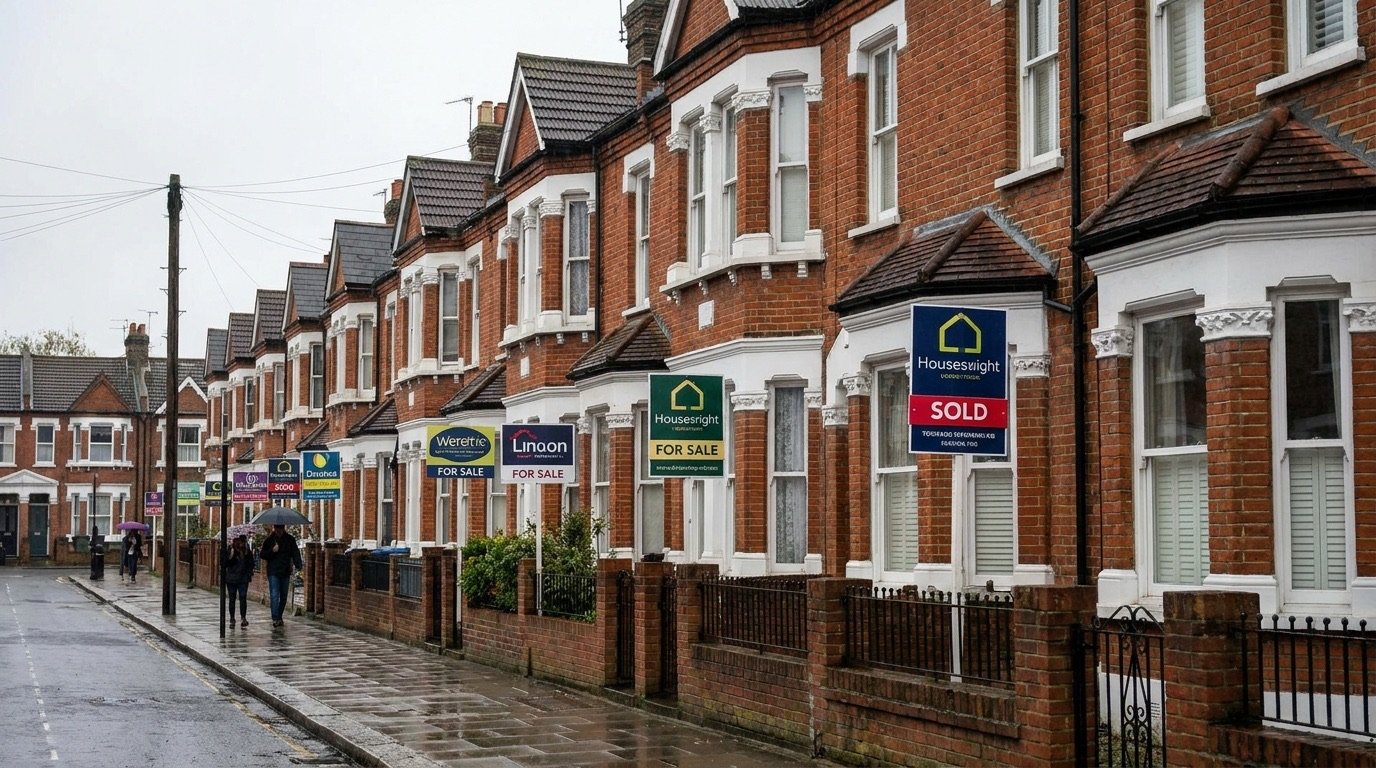
UK house prices slipped in May as renewed global uncertainty sapped buyer confidence, even as several major lenders cut selected mortgage rates in a fresh round of competition for borrowers.
Property values fell 0.6% on a seasonally adjusted basis last month, according to lender data, though prices remained up around 3.8% over the year to April, leaving the typical home still worth more than a year ago.
The dip suggests the market is losing some of the momentum it built earlier in the year, with affordability still stretched and households wary about committing to the biggest purchase of their lives amid an uncertain backdrop.
Momentum fades
Lenders pointed to the uncertainty caused by developments in the Middle East, the subsequent rise in energy prices and the resulting jump in market interest rates as reasons for the loss of momentum in May.
Those swap rates, which underpin the pricing of fixed mortgages, have been volatile in recent weeks, making it harder for lenders to set deals and for buyers to plan with confidence.
Even so, the underlying picture remains one of gentle growth rather than a sharp correction, with the annual rate still positive and the average property worth close to £300,000 according to some lender measures.
A chronic shortage of homes for sale continues to put a floor under prices, preventing the kind of steep falls some had feared when mortgage rates first surged. Demand from buyers, while subdued, has held up better than many forecasters expected.
Lenders cut rates
Despite the wider jitters, the opening weeks of June brought a flurry of rate cuts as lenders jostled for business. A string of major banks and building societies reduced selected fixed deals, offering some relief to borrowers.
The best five-year fixed rates for buyers with large deposits have edged towards 4.4%, while competitive three-year deals are available for those willing to pay an arrangement fee.
Borrowers with smaller deposits, however, continue to pay a premium, and the gap between the headline rates advertised and the deals most first-time buyers can actually access remains wide. Arrangement fees can also significantly alter the true cost of a deal once factored in.
- House prices fell 0.6% in May, seasonally adjusted
- Annual growth around 3.8% in the year to April
- Typical property value close to £300,000 on some measures
- Best five-year fixed rates near 4.4% for large deposits
- Multiple major lenders cut selected fixed deals in early June
The cuts reflect lenders' eagerness to attract borrowers in a subdued market, even as the broader direction of travel for mortgage pricing remains uncertain given the Bank of England's reluctance to cut its base rate further.
“Buyers are getting mixed messages. Headline rates are coming down a little, but the wider economic noise is making people think twice before stretching themselves on a mortgage.”
Affordability still stretched
Despite the recent cuts, mortgage rates remain far higher than the ultra-cheap deals available before 2022, meaning many homeowners coming off old fixed terms still face a significant jump in monthly payments.
First-time buyers continue to face a daunting hurdle, with high prices and stricter affordability tests combining to keep home ownership out of reach for many younger households.
The end of certain stamp duty reliefs and the high cost of saving a deposit while paying rent have compounded the challenge. Many would-be buyers find themselves trapped, unable to save fast enough to keep pace with the prices and rents they face.
Background
The housing market cooled sharply after mortgage rates surged in late 2022, before stabilising as the Bank of England began cutting its base rate. Prices have since recovered modestly, supported by limited supply and resilient demand.
Monthly house price indices from major lenders are watched as a barometer of both household wealth and wider economic confidence, though they can be volatile from month to month and different measures can tell slightly different stories depending on how they are compiled.
What happens next
Much will hinge on the path of interest rates and the wider economy. If global tensions ease and lenders continue trimming rates, activity could pick up over the summer, but a further leg up in energy prices or borrowing costs could keep the market subdued.
The autumn Budget adds another layer of uncertainty, with any changes to property taxation likely to influence buyer and seller behaviour. For now, most analysts expect the market to keep grinding along with modest price movements rather than a dramatic shift in either direction.
Referenced coverage: Our reporting and analysis draws on coverage first reported by Money To The Masses. The NE Times publishes original reporting and independent analysis written by our editorial team. We credit and link the outlets whose primary reporting informed this article.
The NE Times is an independent news and analysis publisher. Our articles combine factual reporting with clearly-written, impartial analysis. Content is for general information and does not constitute professional advice. Disclaimer.
You may also like to read
UK house prices flatline in May as a north-south divide hardens
Halifax says the typical home now costs just under £299,000 with annual growth of 0.5%, but the headline masks a stark split between a buoyant north and a weakening south.
UK house prices fall for first time this year as north-south divide widens
A surprise monthly drop reported by Nationwide has confirmed a cooling property market, with prices sliding in the south while northern regions and the devolved nations continue to climb.
UK house prices hold broadly steady as borrowing costs bite
The average home cost just under £299,000 in May, with Halifax reporting a slight monthly dip while annual growth ticked up to 0.5 per cent.
Bank of England expected to hold interest rates at 3.75% as inflation risks resurface
Economists are near-unanimous that the Monetary Policy Committee will leave borrowing costs unchanged on Thursday, with Middle East tensions and a looming energy bill rise tempering hopes of further cuts this year.