Swinney seizes on Starmer exit to renew independence referendum demand
Scotland's First Minister called Sir Keir's resignation proof that the Westminster system is 'broken', arguing a fresh start is 'only possible with independence'.
Eleanor Whitfield
Writer ·
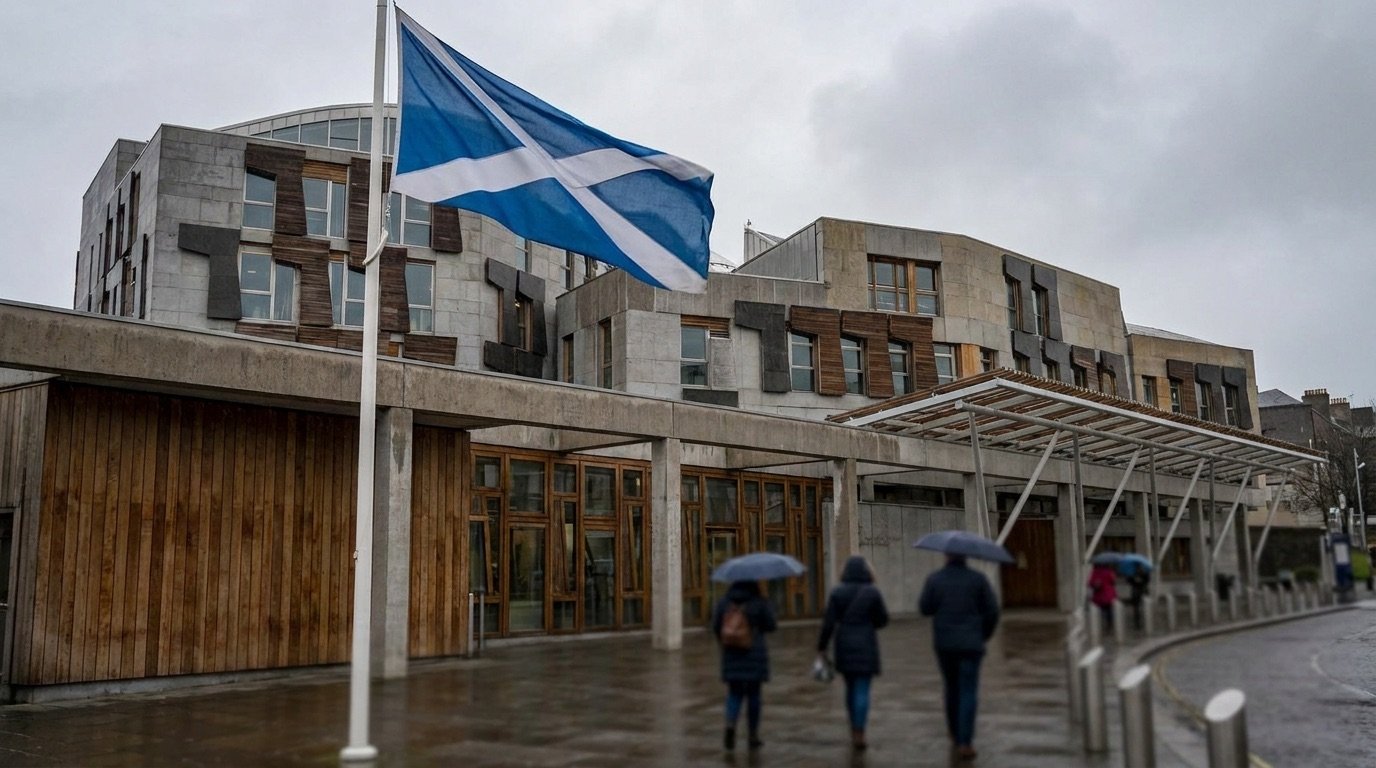
It took John Swinney only hours to turn Sir Keir Starmer's resignation into an argument for Scottish independence. The First Minister and SNP leader said the Prime Minister had made the 'right decision' in quitting, but framed his departure as fresh evidence that the Westminster settlement is fundamentally incapable of serving Scotland.
Calling for a 'fundamental change of direction' from the UK government, Mr Swinney accused Labour of a litany of 'broken promises' and argued that genuine renewal was 'just not possible within the Westminster system'. His conclusion was characteristically direct: 'A fresh start is possible, but only with independence.'
Chaos as the argument
The SNP's pitch leans heavily on instability. With Britain on course for its seventh prime minister in a decade, Mr Swinney cast Sir Keir's exit as another turn of a Westminster revolving door that, in the nationalist reading, traps Scotland in a 'perpetual cycle of chaos, broken promises and unmitigated decline'.
He also turned his fire on the frontrunner to succeed Sir Keir, challenging Andy Burnham directly: if the Greater Manchester mayor 'has any belief in democracy', Mr Swinney said, he must grant Scotland the power to hold a referendum and 'end Westminster's chaos'.
“Scotland deserves better than this. Change is just not possible within the Westminster system. A fresh start is possible, but only with independence.”
A familiar roadblock
The constitutional reality is unchanged by the change of premier. The power to authorise a legally binding independence referendum rests at Westminster, and successive UK governments — Conservative and Labour alike — have refused requests for a second vote since the 2014 ballot.
Critics, including the Scottish Daily Express, dismissed the First Minister's intervention as opportunistic, accusing him of reaching for the referendum lever to deflect from instability rather than to resolve it. The SNP counters that no Westminster leader, however well intentioned, can deliver the change Scottish voters want from inside the union.
Unionist politicians at Holyrood argue the opposite: that a change of UK prime minister is precisely the kind of normal democratic renewal the union allows, and that the SNP's instinct to translate every Westminster event into an independence demand reveals a party more interested in grievance than government. The exchange is, in microcosm, the argument Scotland has been having for more than a decade.
The nationalist arc across the UK
Mr Swinney's intervention does not stand alone. With Plaid Cymru topping the Welsh poll and Sinn Féin leading in Northern Ireland, pro-independence and nationalist parties now hold sway in all three nations outside England — a configuration the SNP is keen to present as a settled verdict on the union's direction of travel.
- Swinney said Starmer made the 'right decision' in resigning
- Accused Labour of 'broken promises' and called for a change of direction
- Argued renewal is impossible within the Westminster system
- Challenged Andy Burnham to grant Scotland a referendum
- Power to authorise a binding referendum remains reserved to Westminster
Background
Scotland last voted on independence in September 2014, rejecting it by 55% to 45%. The SNP has sought a second vote repeatedly since, and a 2022 Supreme Court ruling confirmed that Holyrood cannot legislate for a referendum without Westminster's consent.
Mr Swinney, who returned to the SNP leadership and the role of First Minister in 2024, has sought to rebuild the party's standing after a turbulent period, and views Labour's collapse in the polls as an opening to reclaim disillusioned voters.
What happens next: the SNP will press the independence case hard against whoever wins the Labour contest, but with the constitutional roadblock unmoved, the immediate battleground is the contest for Scottish votes rather than a referendum itself.
Referenced coverage: Our reporting and analysis draws on coverage first reported by The Scotsman. The NE Times publishes original reporting and independent analysis written by our editorial team. We credit and link the outlets whose primary reporting informed this article.
The NE Times is an independent news and analysis publisher. Our articles combine factual reporting with clearly-written, impartial analysis. Content is for general information and does not constitute professional advice. Disclaimer.
You may also like to read
Swinney's SNP returns to power but minority maths force independence reckoning
John Swinney begins a fifth consecutive SNP term at Holyrood after the May election, but with no majority and Reform UK newly installed at parliament, the First Minister's pledge to force a Section 30 confrontation with Westminster is testing his slender authority.
'Sick of the merry-go-round': Lib Dems, Greens and SNP demand real change, not just a new face
Ed Davey, Zack Polanski and John Swinney each welcomed Sir Keir Starmer's exit while warning that another prime ministerial reshuffle means nothing without a change of direction.
Two Scottish by-elections on 18 June test SNP, Labour and Reform north of the border
Voters in Aberdeen South and in Arbroath and Broughty Ferry go to the polls on the same day as Makerfield, in contests watched closely at Holyrood and Westminster.
SNP holds power in Scotland but falls short as Reform breaks through
John Swinney's party will govern as a minority after the 2026 Holyrood election, while Reform UK won its first seats and Labour slumped to a record low.