SNP holds power in Scotland but falls short as Reform breaks through
John Swinney's party will govern as a minority after the 2026 Holyrood election, while Reform UK won its first seats and Labour slumped to a record low.
Eleanor Whitfield
Writer ·
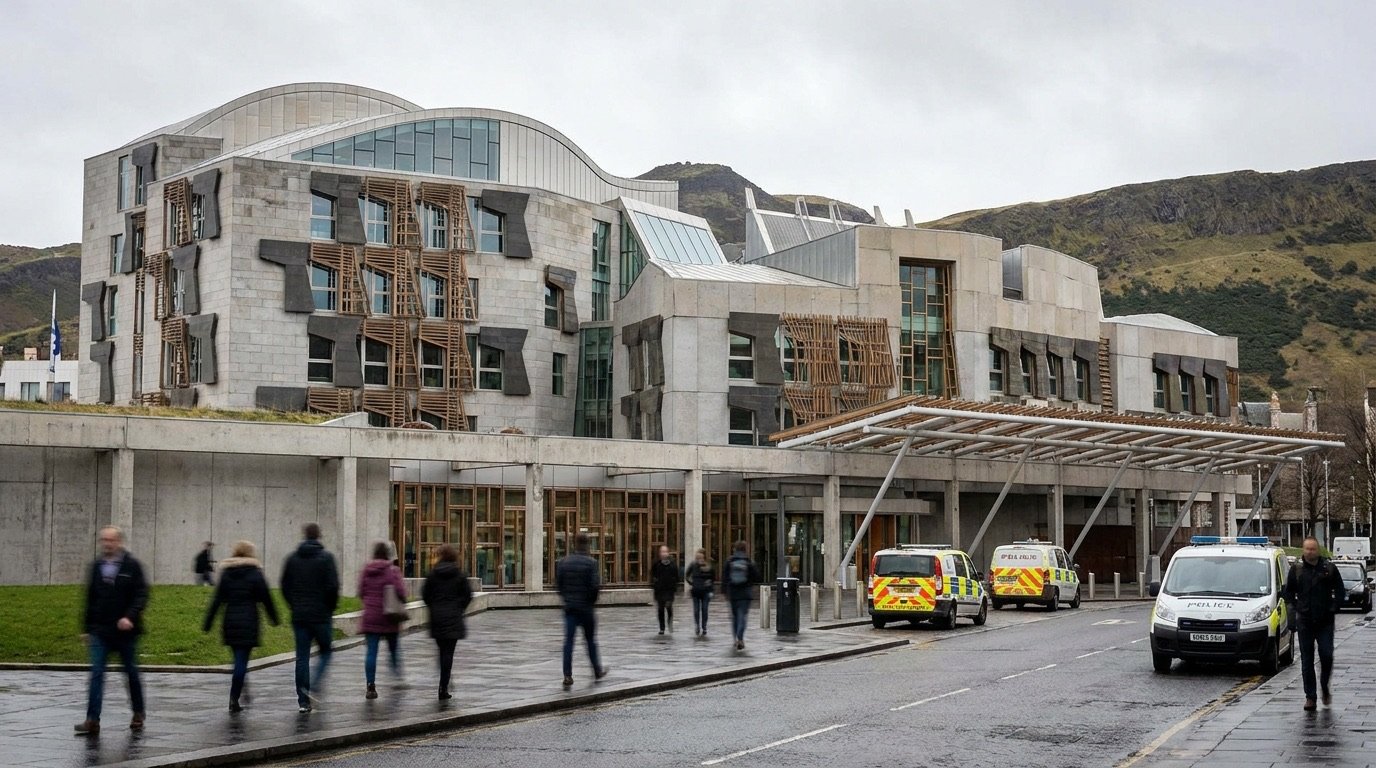
The Scottish National Party secured a fifth consecutive term in the Scottish Parliament election held on 7 May 2026, but fell short of the majority First Minister John Swinney had sought, leaving him to lead a minority administration. The result confirmed the SNP's continued dominance of Scottish politics while underlining the constraints it now faces in governing without a reliable parliamentary majority.
The SNP returned 58 MSPs, seven short of an overall majority. Reform UK and Labour tied for second place on 17 seats each, with the Greens on 15, the Conservatives on 12 and the Liberal Democrats on 10. The arithmetic leaves Swinney dependent on securing support from other parties to pass legislation, a familiar but demanding position for a Scottish first minister.
Scotland's additional member system, which combines constituency seats with regional list seats, is designed to produce results that broadly reflect the share of votes cast and tends to make outright majorities difficult to achieve. The outcome therefore reflects both the durability of the SNP's support and the increasingly fragmented nature of the wider electorate.
Reform's Holyrood debut
Reform UK won seats in a Scottish Parliament election for the first time, claiming all 17 of its seats through the regional list and failing to take any constituencies. The result marked a notable expansion of the party's footprint north of the border, demonstrating that its appeal extends beyond the parts of England where it has made its most dramatic gains.
The party's breakthrough adds a new voice to the Scottish Parliament and complicates the calculations of the established parties. Its arrival in force at Holyrood reflects a broader realignment in British politics, in which Reform has emerged as a significant force capable of drawing support from voters disillusioned with the traditional choices on offer.
For Labour, the night brought its worst-ever Holyrood performance, with the party's seat share falling for a sixth successive election. The Conservatives also recorded their poorest result in a devolved Scottish contest, leaving both of the traditional Westminster opposition parties diminished in the Scottish Parliament.
“The SNP has emphatically won this election.”
— John Swinney, First Minister
Labour's setback
The result represents a particular disappointment for Labour, which had hoped that its return to government at Westminster would translate into renewed strength in Scotland. Instead, the party found itself squeezed, losing ground to both the SNP and the newer challenger parties, and the outcome will fuel debate about its strategy and prospects north of the border.
The continued erosion of Labour's position in Scotland matters well beyond Holyrood, given the importance of Scottish seats to the party's broader fortunes. The Scottish result lands at a moment of acute difficulty for the party nationally, compounding the sense of a movement under pressure on multiple fronts.
- The SNP won 58 seats, seven short of an overall majority
- Reform UK and Labour tied on 17 seats each
- The Greens took 15 seats, the Conservatives 12 and the Liberal Democrats 10
- Reform UK won seats in a Holyrood election for the first time, all via the regional list
- Labour recorded its worst-ever Scottish Parliament result
Governing without a majority
Leading a minority government will require Swinney to build support issue by issue, negotiating with other parties to secure the votes needed to pass his budget and legislative programme. Such arrangements can deliver stable government, but they demand compromise and leave an administration vulnerable to defeats if it cannot command sufficient cross-party backing.
The Greens, who have previously worked closely with the SNP, are likely to be a focus of attention, though the precise shape of any cooperation remains to be determined. Swinney will need to weigh the demands of potential partners against his own priorities, a balancing act that will define the character of the new parliamentary term.
The independence question
Without a majority, the SNP's hopes of pressing for a second independence referendum face significant obstacles, and Swinney will need to negotiate support from other parties to pass his legislative programme. The absence of a clear pro-independence majority weakens the argument for a fresh vote and complicates the party's central constitutional ambition.
How Swinney navigates these pressures, balancing the expectations of his own supporters with the realities of minority government, will shape the next phase of Scottish politics. The election has confirmed the SNP's enduring strength, but it has also revealed a more crowded and competitive landscape in which the party must work harder than ever to advance its agenda.
Referenced coverage: Our reporting and analysis draws on coverage first reported by ITV News. The NE Times publishes original reporting and independent analysis written by our editorial team. We credit and link the outlets whose primary reporting informed this article.
The NE Times is an independent news and analysis publisher. Our articles combine factual reporting with clearly-written, impartial analysis. Content is for general information and does not constitute professional advice. Disclaimer.
You may also like to read
Swinney's SNP returns to power but minority maths force independence reckoning
John Swinney begins a fifth consecutive SNP term at Holyrood after the May election, but with no majority and Reform UK newly installed at parliament, the First Minister's pledge to force a Section 30 confrontation with Westminster is testing his slender authority.
Swinney seizes on Starmer exit to renew independence referendum demand
Scotland's First Minister called Sir Keir's resignation proof that the Westminster system is 'broken', arguing a fresh start is 'only possible with independence'.
Two Scottish by-elections on 18 June test SNP, Labour and Reform north of the border
Voters in Aberdeen South and in Arbroath and Broughty Ferry go to the polls on the same day as Makerfield, in contests watched closely at Holyrood and Westminster.
'Sick of the merry-go-round': Lib Dems, Greens and SNP demand real change, not just a new face
Ed Davey, Zack Polanski and John Swinney each welcomed Sir Keir Starmer's exit while warning that another prime ministerial reshuffle means nothing without a change of direction.