NHS to offer five-session 'precision' radiotherapy for prostate cancer
NHS England has announced that eligible men with early prostate cancer will be offered SABR, a targeted treatment that cuts the number of sessions from at least 20 to five.
Eleanor Whitfield
Writer ·
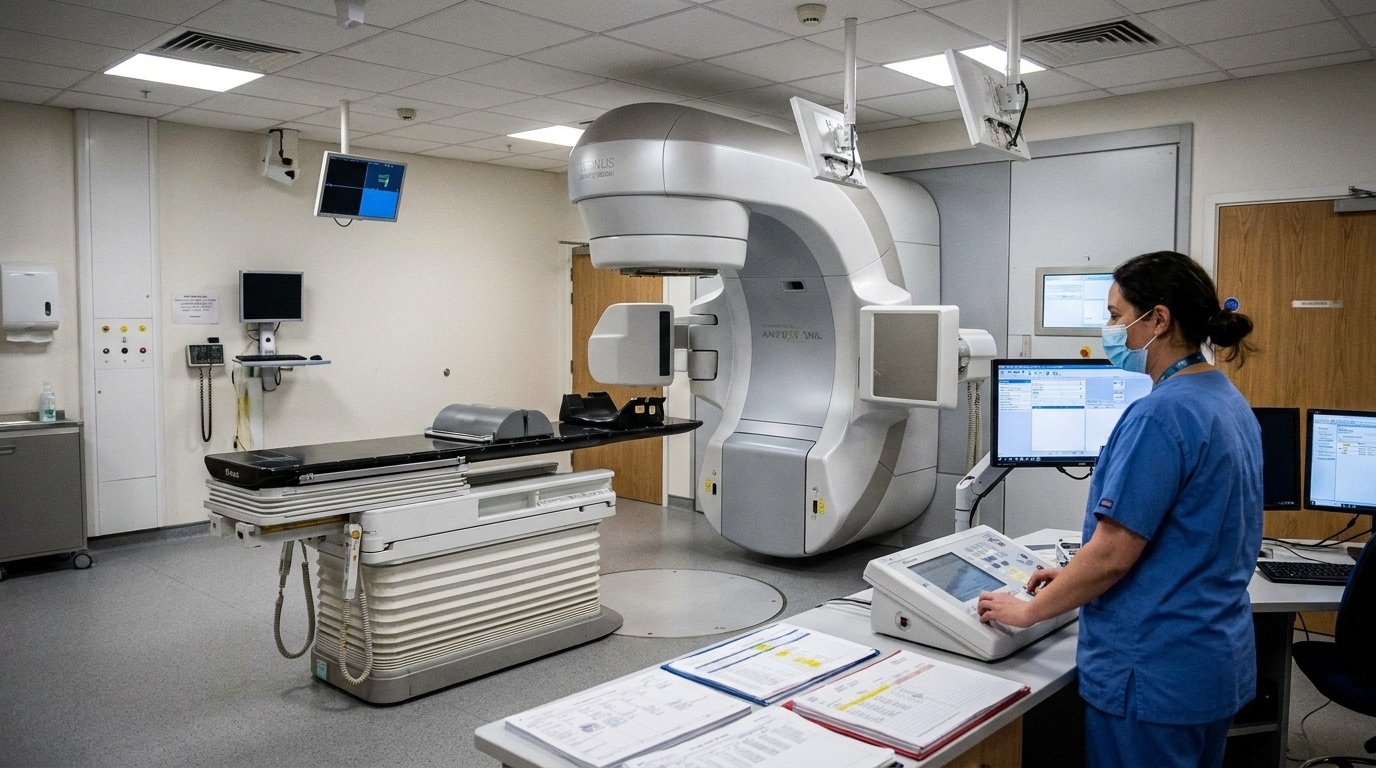
NHS England has announced that eligible men with early prostate cancer will be offered a precision form of radiotherapy known as SABR, which delivers a higher dose directly to the tumour while limiting damage to surrounding healthy tissue. The move represents one of the most significant changes to routine prostate cancer treatment in years, promising shorter, more convenient courses of care for thousands of patients.
Announced on 10 June, the treatment uses focused beams of radiation directed from multiple angles. It can typically be completed in five sessions over a fortnight, compared with at least 20 sessions for conventional radiotherapy, reducing both hospital visits and side-effects. For many men, that means less time travelling to and from hospital, fewer days disrupted by treatment and a faster return to ordinary life.
Stereotactic ablative body radiotherapy, to give SABR its full name, has been used for some cancers for several years, but its extension to early prostate cancer as a standard option marks a notable step. The technique relies on advanced imaging and precise targeting to concentrate the radiation dose where it is needed, sparing nearby organs such as the bladder and bowel.
Thousands could benefit
Around 17,500 men are diagnosed with low or intermediate-risk prostate cancer in England each year, with modelling suggesting roughly 3,500 may choose the new option. The technique is set to be available at all 48 radiotherapy centres in England, with the first sites beginning to offer it within days, giving the rollout a genuinely national reach from the outset.
Prostate cancer is the most common cancer in men in the UK, and outcomes for those diagnosed early are generally very good. The appeal of SABR lies not in dramatically higher cure rates, which are already high for early-stage disease, but in delivering equivalent results with far fewer treatment sessions and a comparable or improved side-effect profile.
“This technology lets us focus a powerful and precise beam directly onto cancer, limiting damage to healthy cells.”
— Professor Peter Johnson, NHS national clinical director for cancer
How it compares with conventional treatment
Traditional external beam radiotherapy for prostate cancer is usually spread across several weeks, with patients attending hospital on most weekdays for a single daily session. While effective, that schedule can be burdensome, particularly for older patients, those who live far from a treatment centre or those who must arrange transport and time away from work or caring responsibilities.
By compressing the course into five sessions, SABR reduces the cumulative disruption substantially. Clinicians stress that not every patient will be suitable, and that the decision will depend on the characteristics of the individual tumour and the patient's overall health, but for those who are eligible the benefits in convenience and quality of life can be considerable.
- SABR delivers radiotherapy in five sessions rather than at least 20
- It targets the tumour precisely, sparing surrounding healthy tissue
- Around 17,500 men are diagnosed with low or intermediate-risk prostate cancer in England each year
- Modelling suggests roughly 3,500 patients a year may choose the option
- The treatment will be available at all 48 radiotherapy centres in England
Background and wider significance
The announcement fits within a broader NHS drive to adopt techniques that improve efficiency as well as outcomes. With cancer services under sustained pressure and waiting times a persistent concern, treatments that achieve the same results in fewer appointments offer a rare combination of clinical and operational benefit. Officials said the rollout could free up around 50,000 appointments a year, capacity that can be redirected to other patients.
Trials are under way to assess whether the approach could also help patients with higher-risk disease, potentially widening the pool of people who could benefit in future. If those studies prove positive, the share of prostate cancer patients treated with shorter, more targeted courses could grow well beyond the current early-stage cohort.
“Shorter courses that achieve the same outcomes are good for patients and good for an overstretched service.”
— An NHS cancer specialist
What it means for patients
For men newly diagnosed with early prostate cancer, the immediate change is the prospect of a more convenient treatment pathway, discussed and decided with their clinical team. Patients are encouraged to talk through the options, including active surveillance, surgery and different forms of radiotherapy, to determine the approach best suited to their circumstances. As the rollout beds in across all centres, SABR is expected to become a familiar part of that conversation, marking a quiet but meaningful improvement in how one of the country's most common cancers is treated.
Referenced coverage: Our reporting and analysis draws on coverage first reported by NHS England. The NE Times publishes original reporting and independent analysis written by our editorial team. We credit and link the outlets whose primary reporting informed this article.
The NE Times is an independent news and analysis publisher. Our articles combine factual reporting with clearly-written, impartial analysis. Content is for general information and does not constitute professional advice. Disclaimer.
You may also like to read

NHS waiting list progress slows as cancer and A&E targets missed
The latest figures show the elective waiting list in England standing at more than 7.2 million cases, with progress on bringing it down described as sluggish and key cancer and emergency targets still being missed.
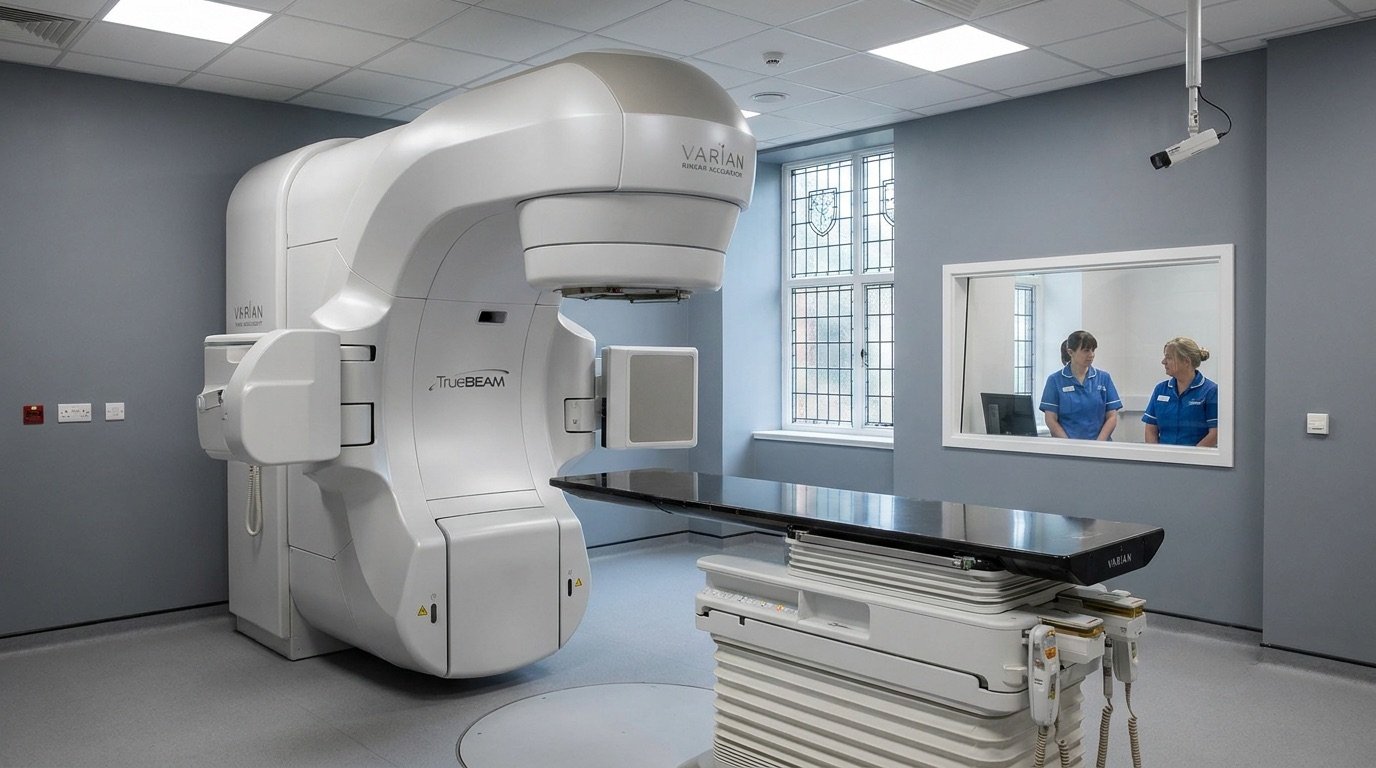
NHS rolls out 'multi-beam' precision radiotherapy for prostate cancer
Thousands of men with localised prostate cancer will be offered SABR, a high-precision radiotherapy that can be delivered in five sessions instead of 20 or more, after a £70 million investment in new machines across England.
NHS rolls out first new ovarian cancer drug in over 20 years
Up to 400 women a year with hard-to-treat ovarian cancer will be offered mirvetuximab soravtansine, a targeted therapy shown to extend survival, after NICE recommended it for use on the NHS in England.
Nottingham maternity review set to lay bare a decade of failings affecting thousands
Donna Ockenden's review into maternity care at Nottingham University Hospitals, billed as the largest of its kind in NHS history, is expected to detail deaths, stillbirths and serious injuries spanning 2012 to 2025.