France pushes through 2026 budget with defence boost as pension reform is shelved
Prime Minister Sébastien Lecornu used special constitutional powers to adopt a delayed budget that lifts military spending sharply, while suspending the contested rise in the retirement age.
Marcus Reeve
Writer ·
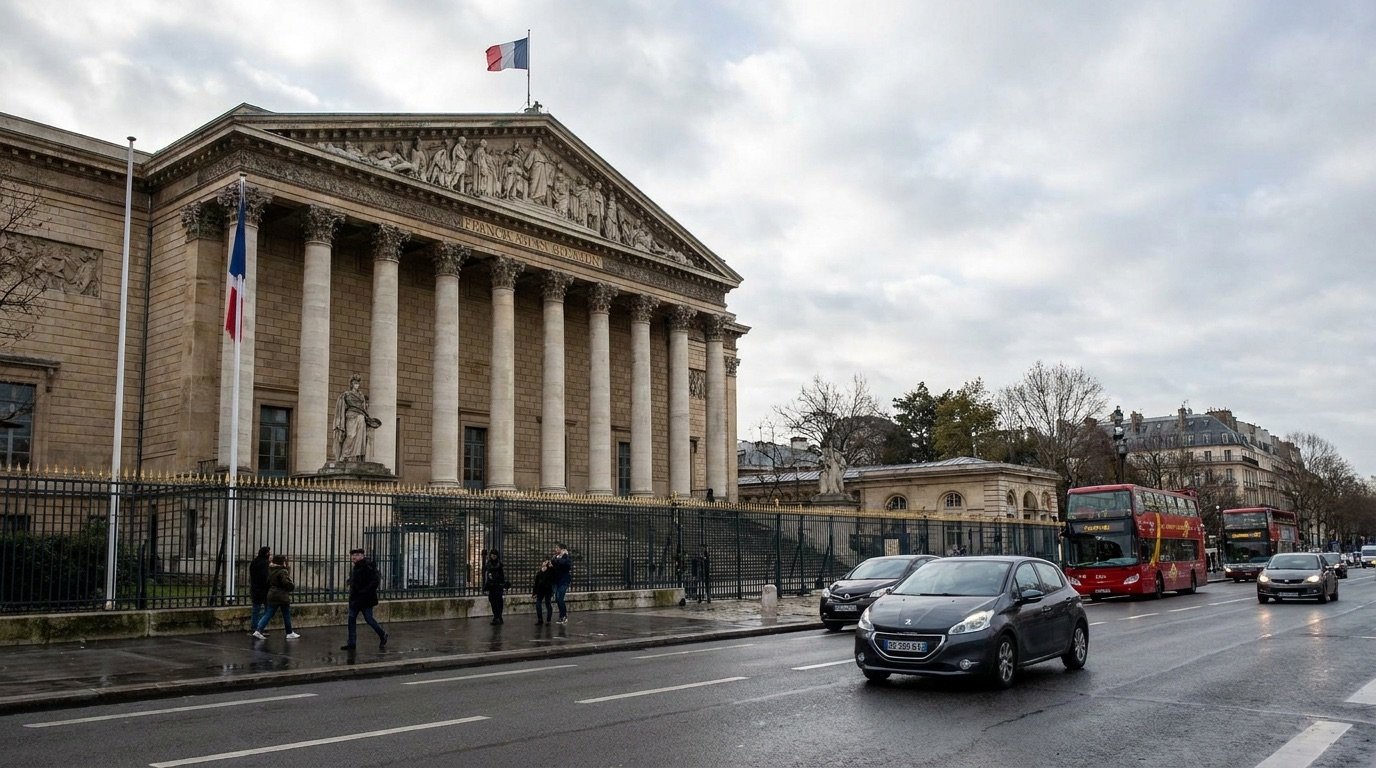
France has adopted its long-delayed 2026 budget, ending months of political turbulence and clearing the way for a substantial increase in military spending promised by President Emmanuel Macron to confront a widening array of security threats.
Prime Minister Sébastien Lecornu invoked a special constitutional power to pass the bill without a parliamentary vote, then survived two no-confidence motions. The move underscored the fragility of France's political arithmetic, where no bloc commands a stable majority and successive governments have struggled to get budgets through a deeply divided National Assembly.
The defence ministry is set to receive an additional 6.7 billion euros compared with 2025, funding a nuclear-powered attack submarine, 362 armoured vehicles and Aster surface-to-air missiles. The increase reflects a broader European trend of rearmament as governments respond to a more dangerous security environment on the continent's borders.
Pension climbdown seals the deal
To secure passage, the government suspended Macron's deeply unpopular pension reform, which would have raised the retirement age from 62 to 64. The reform had triggered some of the largest protests of Macron's presidency when it was first pushed through, and its suspension marked a significant retreat for a president who had staked considerable political capital on the measure.
The concession kept the Socialists from backing the no-confidence votes against Lecornu, illustrating how the survival of the government has come to depend on case-by-case bargaining across the political spectrum. By trading the pension change for budget stability, the government bought itself breathing room, but at the cost of one of its flagship economic policies.
The budget targets a deficit of 5 per cent of GDP, down from 5.4 per cent in 2025, as France attempts to bring its public finances closer to European fiscal rules. Balancing higher defence outlays with deficit reduction remains a delicate task, particularly when politically painful savings measures are difficult to enact in a fractured parliament.
“France faces a widening range of threats, from Russia and nuclear proliferation to terrorism and cyberattacks.”
— Emmanuel Macron, President of France
The key measures contained in the 2026 budget include:
- An additional 6.7 billion euros for defence compared with 2025
- Funding for a nuclear-powered attack submarine and 362 armoured vehicles
- Procurement of Aster surface-to-air missiles
- Suspension of the rise in the retirement age from 62 to 64
- A deficit target of 5 per cent of GDP, down from 5.4 per cent
- Launch of a new voluntary military service for volunteers aged 18 and 19
A continent rearming
The defence push comes as Europe reassesses its security in light of Russia's war in Ukraine and instability in the Middle East. Across the continent, governments have announced higher military budgets, expanded procurement and renewed debate over conscription and national service, reversing decades of post-Cold War retrenchment in defence spending.
France, which maintains an independent nuclear deterrent and one of Europe's most capable armed forces, has positioned itself as a leading voice in calls for greater European strategic autonomy. The 2026 budget's emphasis on advanced platforms and a new voluntary military service reflects an effort to deepen both capability and the pool of personnel available to the armed forces.
Background: a fractured parliament
Since legislative elections left the National Assembly without a clear majority, French governments have repeatedly relied on the constitution's Article 49.3, which allows a bill to pass without a vote unless the government is brought down by a no-confidence motion. The mechanism has become a flashpoint, criticised by opponents as undemocratic but defended by the executive as the only way to govern amid persistent gridlock.
The repeated use of such powers, and the bargaining required to survive confidence votes, has made budget-making a recurring source of instability. Each fiscal cycle has tested the durability of the government and exposed the difficulty of assembling consensus around tax and spending decisions.
What it means
The adoption of the 2026 budget gives the government a measure of stability and delivers on Macron's pledge to strengthen the armed forces, but the shelving of pension reform leaves a structural challenge to the public finances unresolved. The voluntary military service launch signals a longer-term effort to bolster France's defences, while the reliance on special powers points to continued political fragility. Attention will now turn to whether Lecornu's administration can hold together, and how France reconciles its rearmament ambitions with its commitment to reducing the deficit in the years ahead.
Referenced coverage: Our reporting and analysis draws on coverage first reported by PBS News. The NE Times publishes original reporting and independent analysis written by our editorial team. We credit and link the outlets whose primary reporting informed this article.
The NE Times is an independent news and analysis publisher. Our articles combine factual reporting with clearly-written, impartial analysis. Content is for general information and does not constitute professional advice. Disclaimer.
You may also like to read
France and Germany scrap flagship FCAS fighter jet after industrial deadlock
Europe's most ambitious defence programme, the sixth-generation Future Combat Air System, has been abandoned for its core jet after Airbus and Dassault failed to agree on who would lead the work.
NATO diplomacy tested by Iran war fallout
Summit preparations and senior officials' remarks place defence spending, Middle East instability and transatlantic cohesion under the same spotlight.

Taiwan launches combat-readiness drills amid sustained regional pressure
The island has begun a new round of exercises designed to test military readiness, civil coordination and rapid response, as tension in the Taiwan Strait keeps deterrence at the centre of regional security debate.
Australia and Canada Sign $1.75 Billion Arctic Radar Deal
The agreement brings Australian-designed over-the-horizon radar technology to Canada, marking Australia's largest defence export deal as both Five Eyes partners deepen co-operation.