Hundreds of county lines shut down in national crackdown as Liverpool dealer jailed
A co-ordinated police intensification week dismantled 241 drug lines and safeguarded more than 1,000 vulnerable people, as a Merseyside investigation put a city-centre line controller behind bars.
Eleanor Whitfield
Writer ·
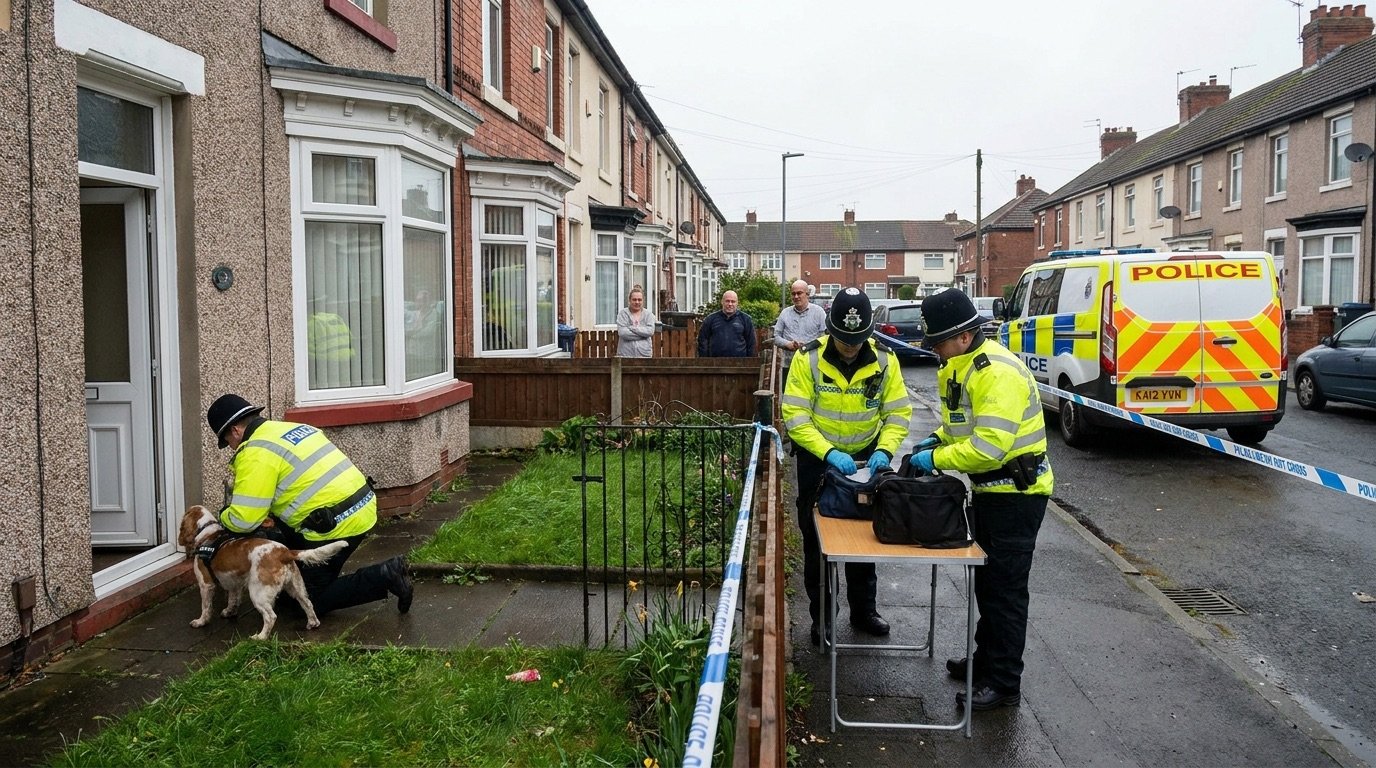
Police forces across England and Wales have dismantled hundreds of so-called county lines drug networks in a co-ordinated national operation, while individual investigations continue to put line controllers behind bars and remove dangerous drugs from communities.
During a national intensification week, officers shut down 241 county lines, made nearly 2,000 arrests and safeguarded more than 1,000 vulnerable people, including hundreds of children exploited by gangs to move and sell drugs.
The crackdown reflects a sustained focus on the county lines model, in which organised crime groups use dedicated phone lines to run drugs from urban hubs into smaller towns, often coercing children and vulnerable adults into the trade.
Inside the national operation
The intensification week saw forces seize around 178 kilograms of Class A drugs, thousands of individual wraps and large quantities of cannabis, alongside hundreds of weapons including bladed articles and firearms.
Officers also recovered roughly 2.4 million pounds in cash. Of those arrested, the overwhelming majority were adults, with a smaller proportion children, underscoring the gangs' continued reliance on exploiting young people.
“Protecting communities is our top priority and the arrests of these organised criminals who control and hold drug lines will contribute hugely to this.”
A line controller jailed in Liverpool
Separately, a Merseyside Police investigation under the force's dedicated county lines team led to the jailing of a man who ran a drug network supplying crack cocaine and heroin into Liverpool city centre. He was sentenced to four years and six months after pleading guilty to being concerned in the supply of Class A drugs.
Detectives established that he was the controller of the operation, directing supply into the city centre. Cases of this kind show how painstaking phone and financial analysis can dismantle a line and identify the person pulling the strings.
The exploitation at the heart of county lines
Safeguarding is central to the county lines response, because the model depends on the exploitation of children and vulnerable adults who are often groomed, threatened or trapped in debt bondage by the gangs that control them.
During the national week of action, more than 1,000 people were safeguarded, including hundreds of children. Police and charities stress that those exploited are frequently victims as well as participants, and that breaking the cycle requires support as well as enforcement.
- 241 county lines were shut down during the national intensification week.
- Nearly 2,000 people were arrested across the operation.
- Around 178kg of Class A drugs and £2.4m in cash were seized.
- Hundreds of weapons, including bladed articles and firearms, were recovered.
- More than 1,000 vulnerable people were safeguarded, including many children.
Background
County lines has become shorthand for a particularly damaging form of organised drug dealing that links city-based crime groups with markets in smaller towns and rural areas. The model is notorious for its use of vulnerable couriers and for the violence that accompanies competition over territory.
Successive national operations have sought to disrupt the lines, prosecute those who run them and identify victims of exploitation. Forces emphasise that closing a line is only part of the task, with safeguarding and longer-term support essential to prevent young people being drawn back in.
What happens next
Police say enforcement will continue alongside efforts to safeguard those exploited, with further investigations and prosecutions expected. The challenge for forces is to sustain the pressure so that dismantled lines are not simply replaced, while ensuring that victims receive the help they need to escape the trade.
Referenced coverage: Our reporting and analysis draws on coverage first reported by National Police Chiefs' Council. The NE Times publishes original reporting and independent analysis written by our editorial team. We credit and link the outlets whose primary reporting informed this article.
The NE Times is an independent news and analysis publisher. Our articles combine factual reporting with clearly-written, impartial analysis. Content is for general information and does not constitute professional advice. Disclaimer.
You may also like to read
Australian police seize record 2.7 tonnes of cocaine near Sydney
Officers found cocaine hidden in underground bunkers beneath modified shipping containers at a property outside Sydney, in what authorities call the country's largest-ever seizure of the drug.
Police facial recognition expands rapidly as watchdogs warn law is lagging behind
Forces have scanned millions of faces this year and ministers plan a national rollout, but biometrics regulators caution that the legal framework is struggling to keep pace with the technology.

Fraud fightback ramps up as new online crime squad targets scam gangs
Investigators are stepping up efforts against the criminals behind online scams, from cryptocurrency fraud to services that defeat banking security, as a new Online Crime Centre brings together police, banks and tech firms.
New offence of assaulting a shop worker takes effect as retail crime fears mount
The Crime and Policing Act 2026 creates a standalone offence for attacks on retail staff and scraps the so-called low-value shoplifting loophole, as retailers warn of soaring abuse on the shop floor.