Borrowing surge fuels warnings of fresh tax rises in autumn Budget
Think tanks caution the Chancellor may need to find tens of billions of pounds in the autumn, as weaker growth and higher debt costs eat into the fiscal headroom built up last year.
Eleanor Whitfield
Writer ·
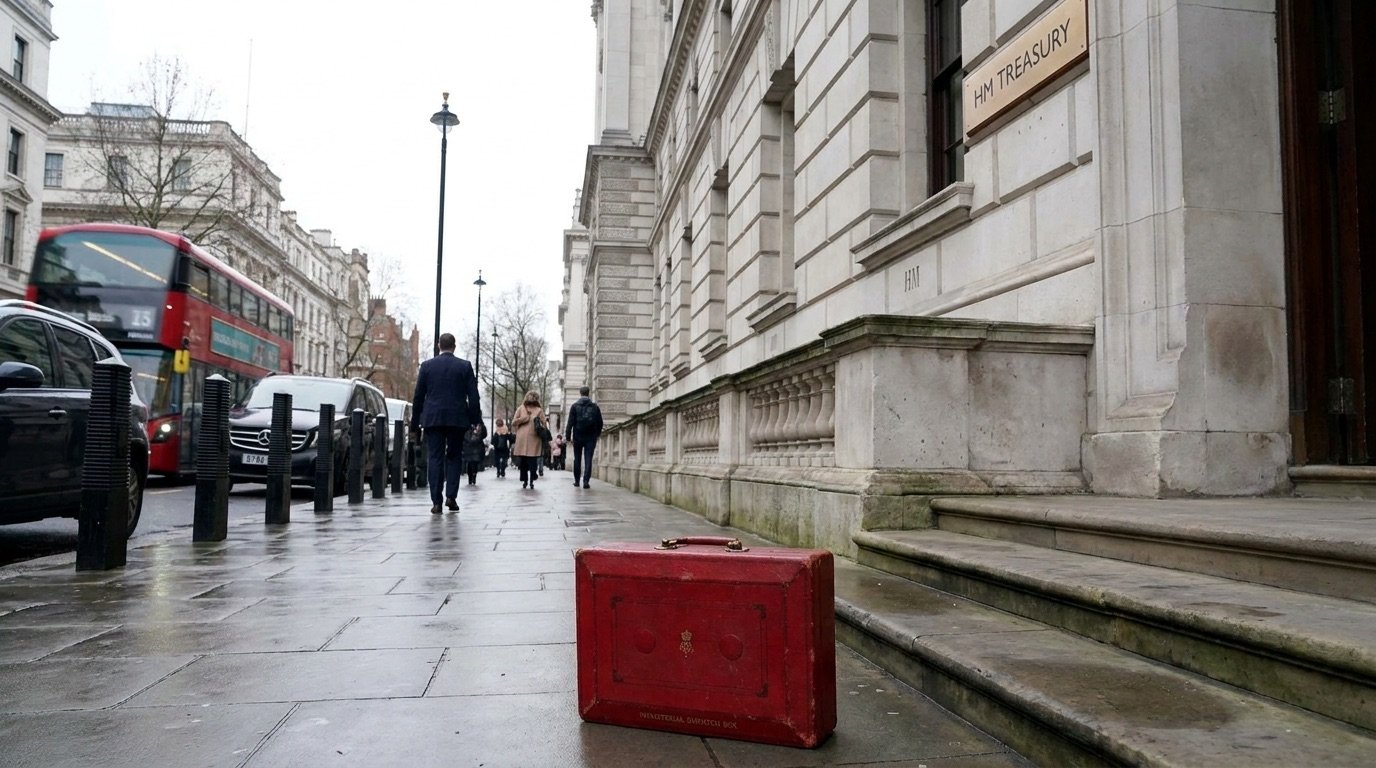
Pressure is building on the Chancellor to announce fresh tax rises at the autumn Budget, as a combination of weaker growth, rising debt costs and surging borrowing threatens to wipe out the fiscal headroom she built up last year.
Leading think tanks have warned that the government may need to find tens of billions of pounds to stay within its self-imposed fiscal rules, with one analysis suggesting a shortfall of around £26bn could open up by the end of the parliament.
The warnings come as the economy contracts and inflation lingers above target, a combination that erodes tax receipts while pushing up the cost of servicing the national debt.
Headroom under threat
The Chancellor used last year's autumn Budget to push tax as a share of the economy towards a record high, partly to build a buffer against her fiscal rules. But economists warn that buffer is being steadily eaten away.
Her rules require day-to-day spending to be funded without borrowing by the end of the parliament and government debt to be falling as a share of national income. Meeting both is becoming harder as the growth outlook deteriorates.
Higher market interest rates, partly a consequence of global energy-driven inflation, have raised the cost of new government borrowing, adding further strain to the public finances.
Debt interest payments have become one of the largest items in the public accounts, rivalling spending on major public services. A significant chunk of government debt is also linked to inflation, meaning that every uptick in prices automatically increases what the Treasury must pay out.
Where the axe could fall
Speculation has already begun over which taxes might rise. With the government having previously pledged not to increase the headline rates of the main taxes on working people, attention has turned to other levers and to the freezing of thresholds.
Freezing income tax thresholds, often described as a stealth tax, drags more people into higher bands as wages rise and is seen as a politically easier option than headline rate increases.
Other options under discussion include changes to capital gains, inheritance tax, pension reliefs and property taxation, each of which carries its own political risks. Every potential measure has vocal opponents, and the Chancellor will be acutely aware of the backlash that greeted previous revenue-raising decisions.
- Think tanks warn of a possible £26bn shortfall by the end of the parliament
- Tax as a share of GDP already heading towards a record high
- Two fiscal rules: balance day-to-day spending and get debt falling
- Weaker growth and higher debt costs eroding headroom
- Threshold freezes seen as a likely revenue-raiser
Any tax decisions are expected to be reserved for the autumn Budget, with the Chancellor having committed to making major fiscal choices once a year rather than tinkering at every fiscal event.
“The arithmetic is unforgiving. With growth this weak and borrowing rising, the Chancellor is running out of room, and that points towards another significant round of tax rises.”
Political tightrope
The prospect of further tax rises presents an acute political challenge for the government, which has promised to ease the burden on working households while also stabilising the public finances and protecting key services.
Critics argue that repeated tax increases risk choking off the very growth the government says it wants to deliver, while supporters insist that fiscal credibility is essential to keeping borrowing costs in check.
The memory of past market turmoil, when unfunded fiscal plans triggered a sharp sell-off in government bonds, looms large over the debate. The Chancellor has repeatedly stressed that maintaining the confidence of financial markets is non-negotiable, even at the cost of unpopular decisions.
Background
The UK's public finances have been under sustained strain since the pandemic and the energy crisis, which together pushed debt to its highest level relative to the economy in decades. Successive chancellors have struggled to balance investment, public services and fiscal discipline.
The independent forecaster's assessment of the outlook will be central to the autumn Budget, determining how much room the Chancellor has to manoeuvre. Its judgements on growth, productivity and borrowing costs can swing the available headroom by billions of pounds in either direction.
What happens next
All eyes now turn to the autumn Budget, when the Chancellor will set out her tax and spending plans against the latest official forecasts. Until then, speculation over which taxes might rise and which spending might be squeezed is likely to dominate the economic debate.
Much will depend on whether the economy stabilises over the summer or continues to weaken. A further deterioration would narrow the Chancellor's options still further, while any unexpected improvement in growth or borrowing could ease the pressure and give her more flexibility to avoid the most painful choices.
Referenced coverage: Our reporting and analysis draws on coverage first reported by Yahoo Finance UK. The NE Times publishes original reporting and independent analysis written by our editorial team. We credit and link the outlets whose primary reporting informed this article.
The NE Times is an independent news and analysis publisher. Our articles combine factual reporting with clearly-written, impartial analysis. Content is for general information and does not constitute professional advice. Disclaimer.
You may also like to read
Reeves sets out multi-year spending plans with billions for NHS and defence
The chancellor unveiled her first multi-year settlement, boosting health, defence and nuclear power, but warned that some departments would lose out.

Markets shrug, then watch: pound steady and gilts ease as investors look past Starmer's exit
Sterling and government bonds moved only modestly on news of the resignation, with investors focused less on the departing prime minister than on whether his successor sticks to the fiscal rules.
Reeves pours billions into NHS, defence and nuclear in make-or-break spending review
The Chancellor set departmental budgets for the rest of the decade, prioritising health and security while conceding that some areas would feel the squeeze.

France pushes through 2026 budget with defence boost as pension reform is shelved
Prime Minister Sébastien Lecornu used special constitutional powers to adopt a delayed budget that lifts military spending sharply, while suspending the contested rise in the retirement age.