Youth unemployment hits decade high as UK job vacancies dry up
One in seven young people are now looking for work, with the youth jobless rate climbing to 14.7 per cent and vacancies falling to their lowest level since 2021.
Rajan Mehta
Writer ·

Youth unemployment in the UK has risen to 14.7 per cent, meaning roughly one in seven young people are searching for work but unable to find it, according to the latest figures from the Office for National Statistics. It is the highest rate in more than a decade, and a sobering signal that the labour market's long stretch of strength is fading.
The deterioration in prospects for younger workers comes against a wider backdrop of weakening demand for labour across the economy. While headline unemployment remains low by historical standards, the trajectory has turned, and the burden of the slowdown is falling disproportionately on those at the start of their careers.
Economists have long warned that young people are among the first to feel the effects of a cooling jobs market, because they are more likely to be in temporary or entry-level roles, and because employers facing uncertainty tend to freeze hiring before cutting existing staff. The latest data bears that pattern out.
Vacancies fall, payrolls shrink
The overall unemployment rate stood at 5.0 per cent in the first quarter of the year. Job vacancies dropped to 705,000 in the February-to-April period, the lowest level since early 2021, while the number of payrolled employees fell by around 100,000 over the month to 30.2 million. Each of those figures points in the same direction: employers are pulling back.
Vacancies are a closely watched leading indicator because they reflect employers' appetite to expand. After reaching record highs in the wake of the pandemic, when firms struggled to fill posts, openings have steadily declined for many months. The fall back to levels last seen in early 2021 suggests the era of acute labour shortages is firmly over.
- Youth unemployment at 14.7 per cent, a decade high
- Overall unemployment at 5.0 per cent
- Vacancies down to 705,000, lowest since 2021
- Payrolled employees down 210,000 over the year
- Payrolls fell by around 100,000 in the latest month alone
Ben Harrison of the Work Foundation said the figures showed one in seven young people now seeking work, describing it as the highest rate in more than ten years. Recruitment industry figures pointed to redundancy rates remaining higher than a year earlier as vacancies continued to slide, a combination that leaves new entrants competing for a shrinking pool of openings.
Business groups warned that young people are finding it especially difficult to get a foothold on the career ladder, and called for renewed efforts to close the gap between the employment rate and the government's longer-term target. Apprenticeships, traineeships and targeted hiring incentives have all been floated as potential remedies.
Why young workers bear the brunt
There are structural reasons why downturns hit the young hardest. Without an established track record, school and university leavers rely on entry-level roles that are often the first to be cut when budgets tighten. Many also work in sectors such as hospitality and retail that are particularly sensitive to swings in consumer confidence.
The consequences can be long-lasting. Research consistently shows that periods of unemployment early in a career can depress earnings and job security for years afterwards, a phenomenon economists call scarring. A cohort that struggles to find work now may carry the effects well into the next decade, which is why policymakers treat rising youth unemployment as more than a short-term statistic.
“When you cannot get that first job, you miss out on the experience and confidence that open the next door. The risk is a whole generation starting on the back foot.”
— A labour market policy researcher
Background: a turning point for the jobs market
For much of the period following the pandemic, the UK labour market was defined by scarcity. Employers competed for staff, wages rose briskly and vacancies hit record levels. That dynamic helped push up inflation but also gave workers, including the young, unusual bargaining power.
The picture has now reversed. Higher borrowing costs, weak economic growth and global uncertainty have made firms more cautious, and the cumulative effect is a market that is loosening across the board. The rise in youth unemployment is among the clearest signs that the balance of power has shifted back towards employers.
What happens next
Much will depend on the wider economy. If growth stabilises and confidence returns, hiring could pick up and the pressure on younger workers ease. But with forecasters cautious about the outlook and energy-related risks clouding the picture, a swift recovery is far from assured.
In the meantime, attention is likely to focus on what support is available for those struggling to find work, from skills training to employment schemes. The central question, as the Work Foundation and others have framed it, is what happens to the one in seven young people now looking for work, and whether the country can avoid the lasting damage that previous downturns inflicted on the young.
Referenced coverage: Our reporting and analysis draws on coverage first reported by FE News. The NE Times publishes original reporting and independent analysis written by our editorial team. We credit and link the outlets whose primary reporting informed this article.
The NE Times is an independent news and analysis publisher. Our articles combine factual reporting with clearly-written, impartial analysis. Content is for general information and does not constitute professional advice. Disclaimer.
You may also like to read
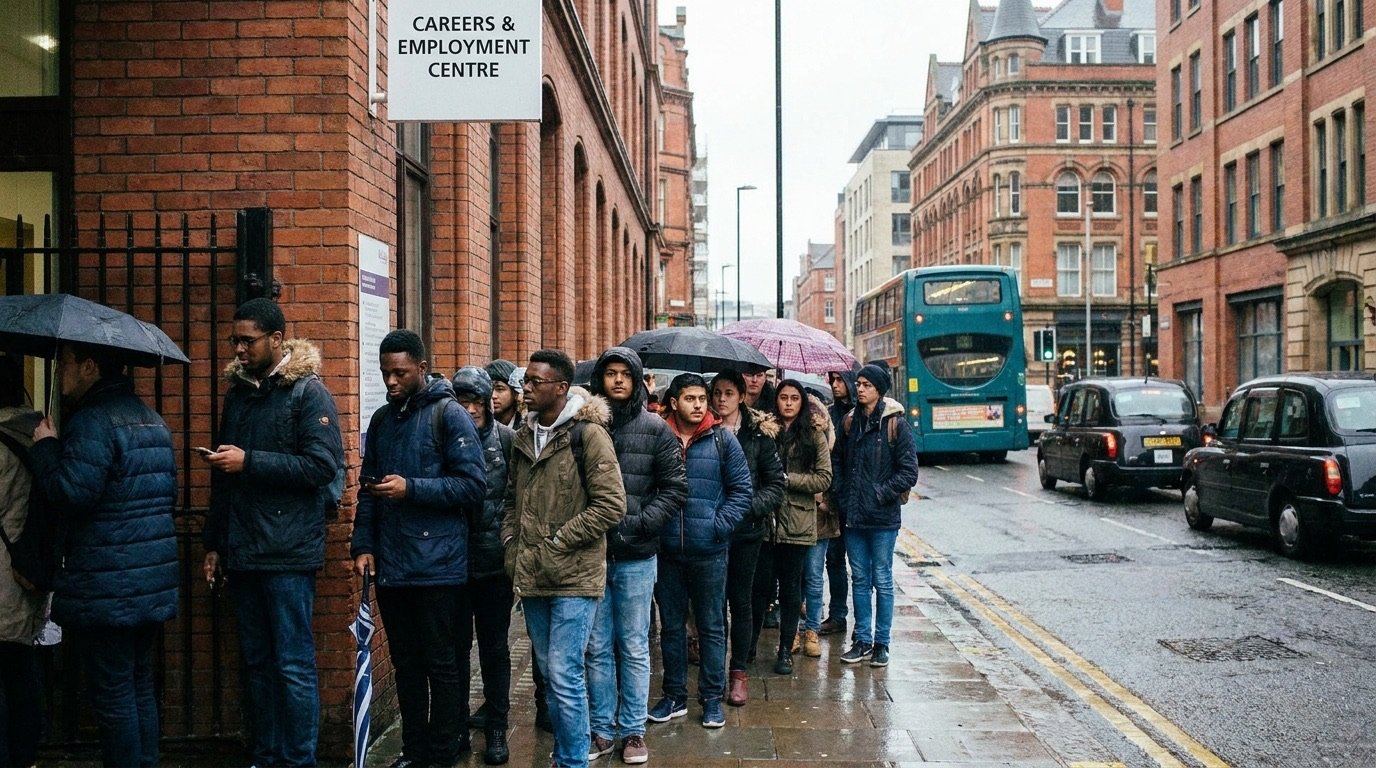
One in seven young people now out of work as UK jobs market weakens further
Youth unemployment has climbed to 14.7%, its highest level in more than a decade, as the broader labour market loses momentum and payrolled employment falls. Economists warn that a generation risks being scarred by a downturn that has crept up almost unnoticed.
Unemployment climbs to 5% as UK labour market shows deepening strain
Payroll numbers are falling and youth unemployment has hit its highest level in over a decade, while pay growth barely keeps pace with inflation, painting a picture of a jobs market under pressure.

Permanent hiring slides again as firms hold back on recruitment
The closely watched Report on Jobs shows employers leaning on temporary staff while delaying permanent appointments amid an uncertain economic backdrop.
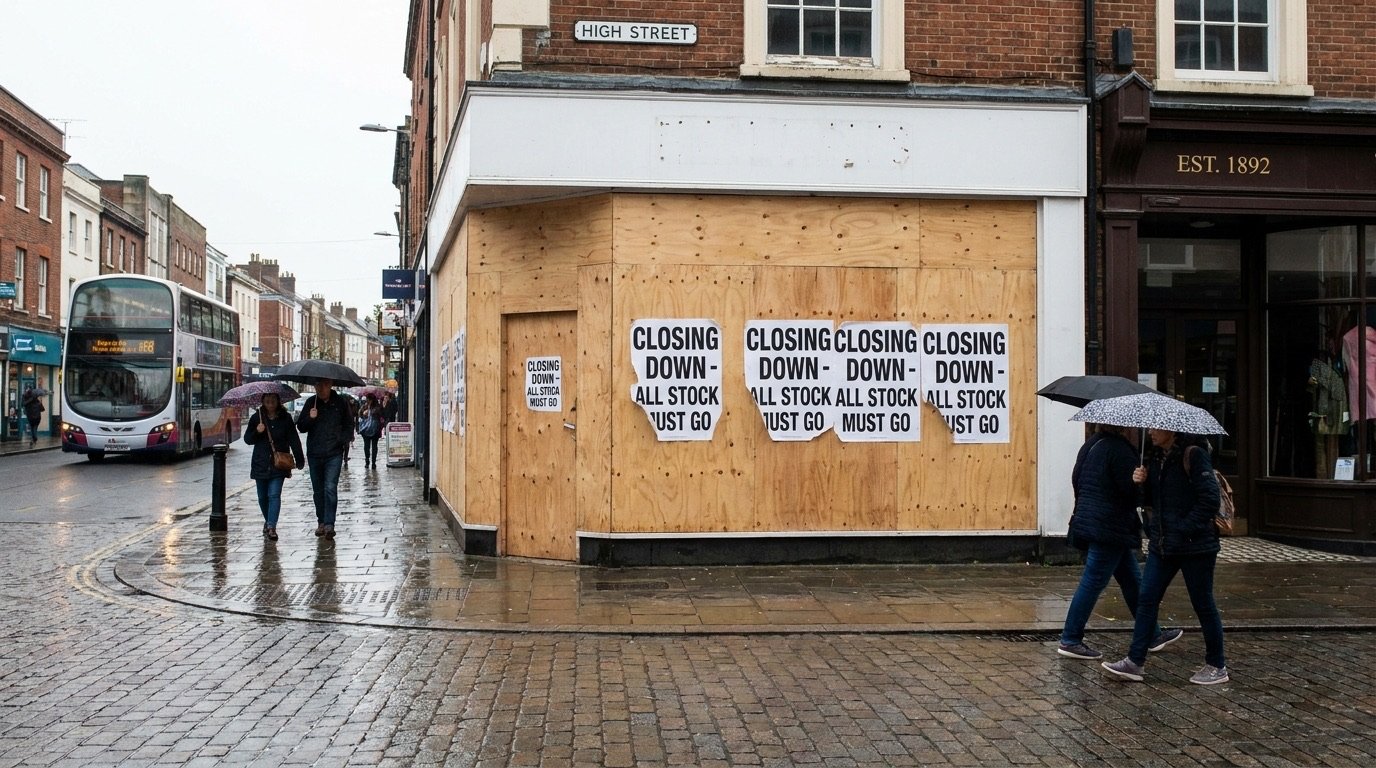
Quiz shutters its last 37 shops as Britain's high street reckoning deepens
The Scottish fashion chain is closing its remaining stores by the end of June after a second collapse into administration in under a year, with around 500 jobs lost and other names following it off the high street.