SpaceX rings the Nasdaq bell and launches a rocket on the same morning in record-breaking debut
Elon Musk's rocket company became publicly traded on 12 June at a valuation near $1.77 trillion, marking it out as the largest stock market debut in history while a Falcon 9 climbed to orbit hours earlier.
Rajan Mehta
Writer ·
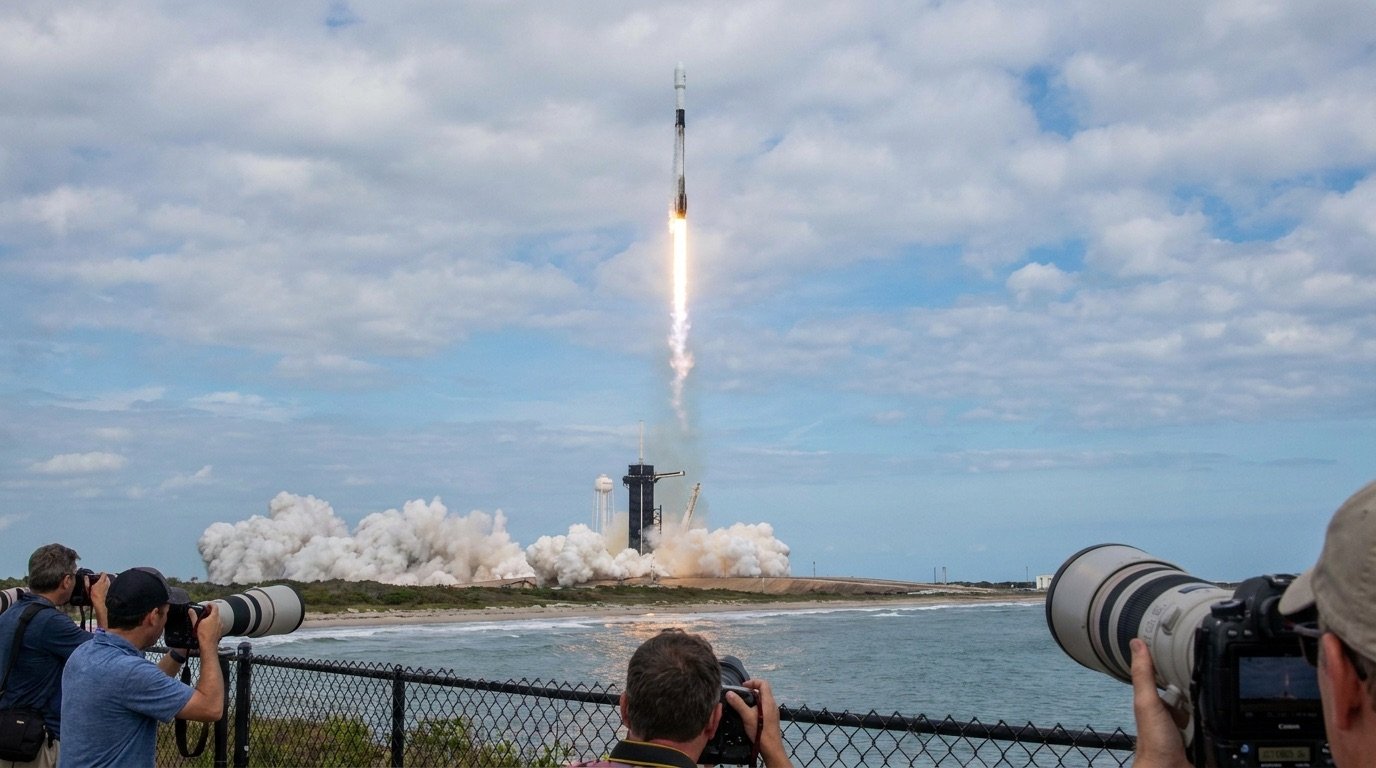
SpaceX did its public market debut the only way a rocket company really could: by launching a rocket. On the morning of 12 June, as the company's shares began trading on the Nasdaq under the ticker SPCX, a Falcon 9 lifted off from Cape Canaveral carrying a fresh batch of Starlink satellites, neatly synchronising a Wall Street milestone with the business that made it possible.
The numbers are staggering. SpaceX priced its offering at $135 a share for 555.6 million Class A shares, raising roughly $75 billion at a valuation of about $1.77 trillion. That makes it the largest initial public offering in stock market history, eclipsing every previous record and instantly turning a privately held aerospace firm into one of the most valuable listed companies on Earth.
By the time markets had digested the listing, the stock had run well above its offer price, trading north of $200 within days, a sign of ferocious investor appetite for a company that has dominated the launch industry and built the world's largest satellite constellation.
A launch to match the listing
The Starlink 10-54 mission was no mere ceremonial flight. It marked the 650th Falcon 9 launch overall and the 68th of 2026 alone, a cadence no other launch provider has come close to matching. Liftoff came at 8:37 a.m. EDT, sending 29 Starlink V2 Mini Optimised satellites into low Earth orbit.
The first-stage booster, B1080, notched its 27th successful flight before landing on the drone ship A Shortfall of Gravitas, underlining the reusability that has driven SpaceX's costs down and its launch rate up. The company's chief operating officer captured the mood at the opening bell.
“We have a history of making history. We did open this morning in a rather exciting way. We launched a Falcon 9 and Starlink satellites to orbit.”
— Gwynne Shotwell, SpaceX president and chief operating officer
What the prospectus revealed
Going public forced an unusually secretive company to open its books. SpaceX filed its S-1 prospectus with the US Securities and Exchange Commission on 20 May, giving investors their first detailed look at the finances behind the rockets. The picture was one of enormous revenue ambition paired with heavy spending on the next generation of hardware.
- Ticker SPCX, listed on the Nasdaq
- Offer price of $135 per share across 555.6 million shares
- Approximately $75 billion raised at a valuation near $1.77 trillion
- Around $3 billion spent on Starship development in 2025 alone
- Starlink revenue and the launch business cited as the core of growth
The company was candid that its future hinges on Starship, the fully reusable super-heavy vehicle it is still flight-testing. Starship is central to SpaceX's plans for cheaper mass-to-orbit, deeper Starlink deployment and eventual missions to the Moon and Mars, but it remains expensive and unproven at scale. Investors are effectively buying into both a profitable present and a speculative future.
Starlink, by contrast, is the engine doing the work today. The constellation has grown into the largest network of satellites ever flown, delivering broadband to consumers, businesses, airlines and militaries in regions that traditional infrastructure has never reached. It is that recurring, subscription-style revenue, rather than one-off launches, that underpins much of the case for a trillion-dollar valuation, and the relentless launch cadence on display this month is what keeps the constellation growing.
“You are not just buying a launch company. You are buying a bet on Starlink becoming a global telecoms utility and on Starship rewriting the economics of getting to orbit. The valuation only makes sense if both pay off.”
— a market analyst
Background
Founded in 2002, SpaceX spent two decades as the most consequential private company in spaceflight, resisting public listing even as its valuation climbed through successive private funding rounds. The decision to list reflects both the capital intensity of Starship and Starlink and the appetite among public investors for direct exposure to a firm that has effectively cornered Western commercial launch.
The company also pioneered the reusable rocketry that now defines the industry, repeatedly landing and reflying boosters in a way once dismissed as impractical. That capability transformed the economics of access to space and left rivals scrambling to catch up, helping explain why investors were willing to assign SpaceX a valuation that dwarfs most established aerospace firms combined.
What happens next: with public shareholders now watching every quarter, SpaceX faces fresh pressure to turn Starship from a test programme into an operational workhorse and to keep Starlink growing fast enough to justify a trillion-dollar-plus price tag. The same scrutiny that funds ambition can also punish delay, and the company's famously high-risk engineering culture will now play out partly in the glare of an earnings call.
Referenced coverage: Our reporting and analysis draws on coverage first reported by Spaceflight Now. The NE Times publishes original reporting and independent analysis written by our editorial team. We credit and link the outlets whose primary reporting informed this article.
The NE Times is an independent news and analysis publisher. Our articles combine factual reporting with clearly-written, impartial analysis. Content is for general information and does not constitute professional advice. Disclaimer.
You may also like to read
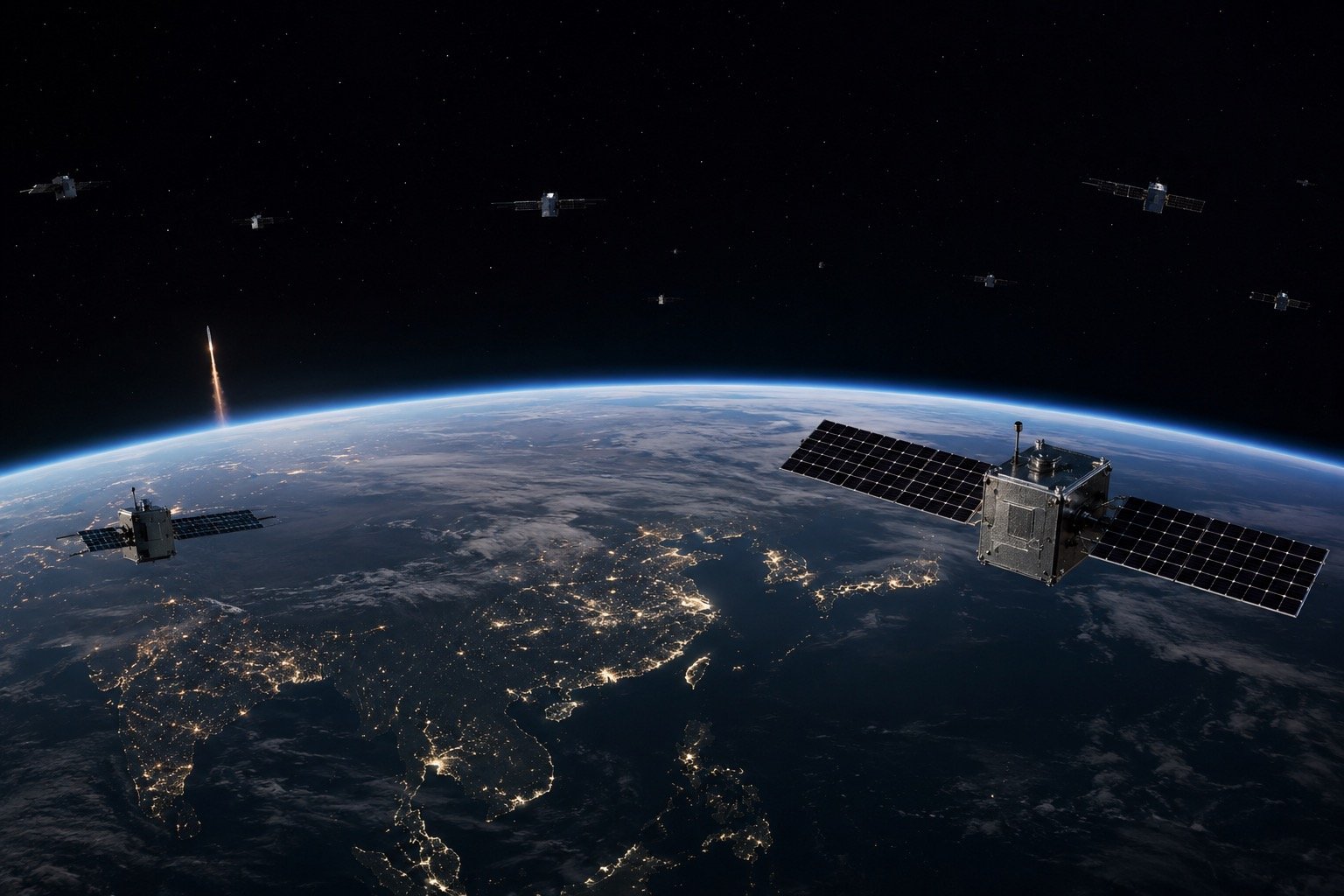
China's SpaceSail Pushes Into The Satellite Internet Race
State-backed SpaceSail says it is ready for its first commercial service and is in talks with dozens of countries to challenge Elon Musk's Starlink.
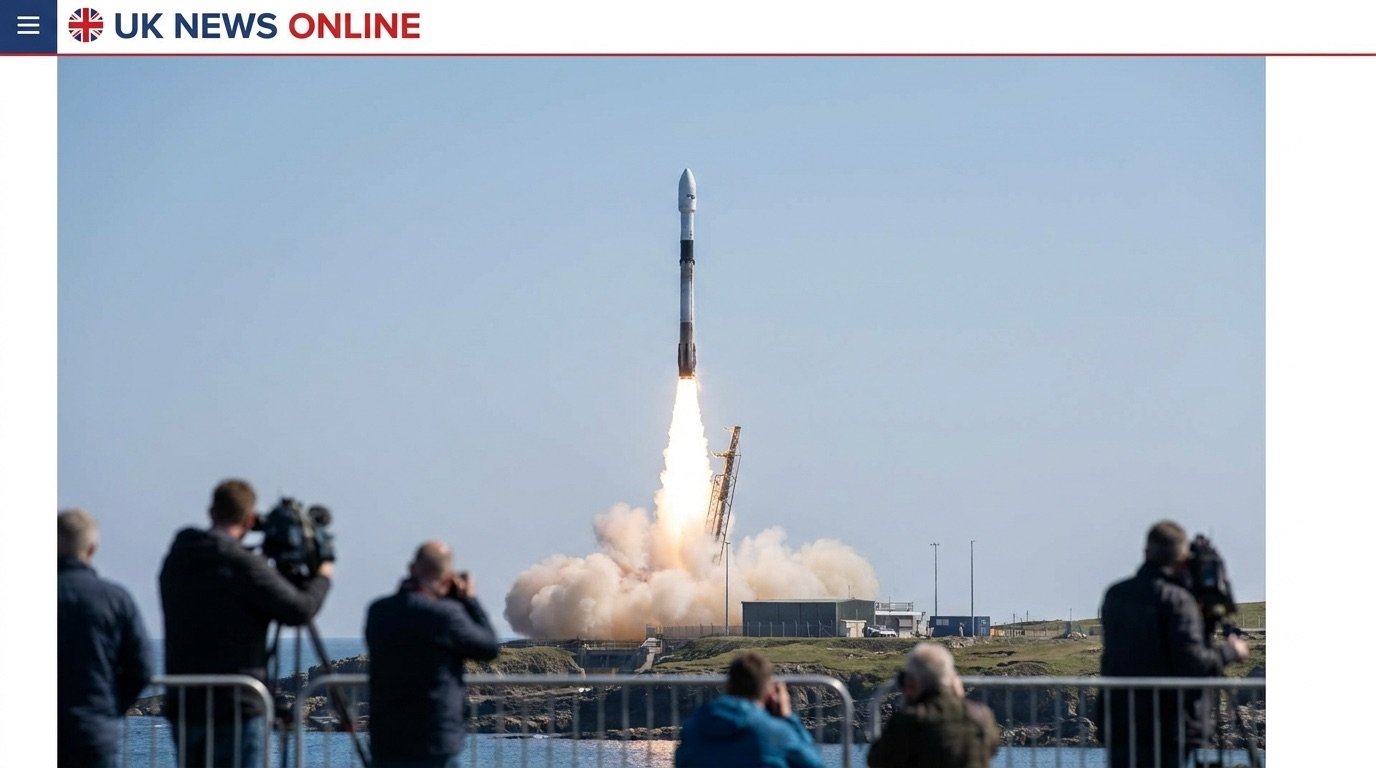
SpaceX storms the stock market with a $1.77tn Nasdaq debut
Elon Musk's rocket company sold $75bn of shares as it went public for the first time, then launched a Falcon 9 mission on the very same morning.
Anthropic files confidentially for stock market listing after $965bn valuation
The maker of the Claude chatbot has lodged a confidential filing with US regulators, setting the stage for one of the year's biggest artificial-intelligence flotations.

Big Tech sell-off drags Wall Street lower as investors rethink the AI rally
Sharp falls among the largest technology companies pulled US stocks down, with the Nasdaq hit harder than the Dow as traders reassessed lofty valuations and interest-rate expectations.