Bank of England set to hold rates at 3.75% as oil shock derails hopes of summer cuts
Economists are virtually unanimous that the Monetary Policy Committee will leave borrowing costs unchanged on Thursday, with a Middle East oil-price spike forcing rate-setters into a holding pattern just as households had begun to hope for relief.
Rajan Mehta
Writer ·
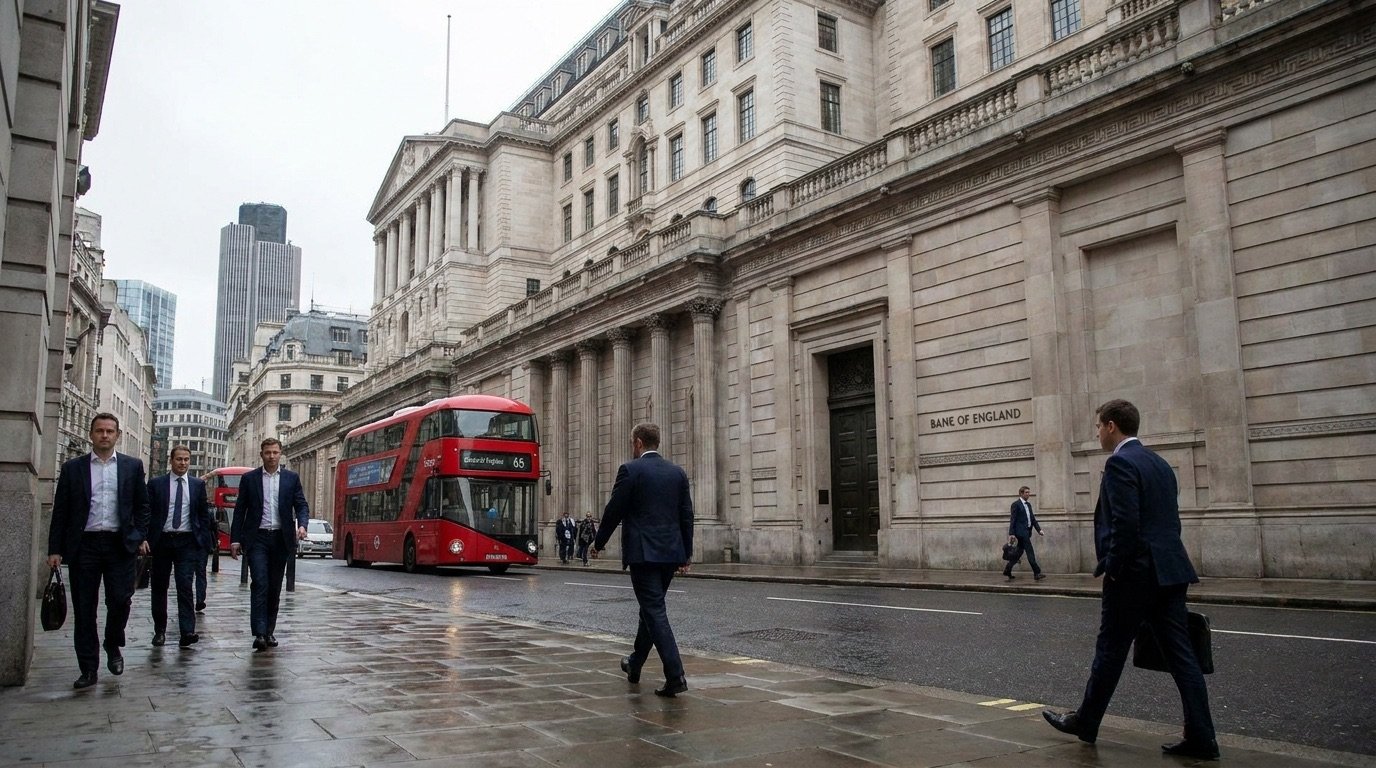
The Bank of England is widely expected to keep its key interest rate at 3.75% when the Monetary Policy Committee announces its latest decision on Thursday 18 June, dashing the hopes of borrowers who began the year anticipating a series of cuts. A survey of economists found near-unanimous agreement that rate-setters will sit on their hands, with the debate now centred not on whether rates will fall but on whether they might have to rise.
The shift in mood has been dramatic. As recently as the spring, the consensus pointed towards inflation drifting back towards the Bank's 2% target and a gentle path of rate reductions through the second half of the year. A conflict in the Middle East and the energy-price shock that followed have upended that calculus, leaving the committee caught between a slowing economy and renewed inflationary pressure.
This is general economic information rather than personal financial advice, but the decision will ripple through mortgages, savings accounts and business borrowing across the country.
Why the doves have gone quiet
At its April meeting the MPC voted 8-1 to hold, with the single dissenter arguing for a rate rise rather than a cut, an unusually hawkish split that signalled where the committee's anxieties lay. Since then, the inflation picture has deteriorated. Consumer price inflation, which had eased to 2.8% in April, is now expected to climb back towards 3.5% by the end of the year as higher oil and gas costs feed through to the petrol pump and household energy bills.
The Bank has previously cautioned that indirect effects from oil prices could add roughly a third of a percentage point to inflation in the third quarter. For a committee whose credibility rests on bringing inflation sustainably back to target, that is precisely the wrong trajectory at precisely the wrong moment.
“Six months ago the question was how fast the Bank could cut. Now the honest answer is that the next move could go either way, and the committee will not want to commit to anything until the energy picture is clearer.”
— An economist at a UK consultancy
What it means for mortgages and savings
For the roughly 1.6 million households due to remortgage this year, the prospect of rates staying higher for longer is unwelcome news. Many had been counting on cheaper fixed deals later in 2026; instead, lenders have been repricing their offers to reflect the diminished chance of cuts.
Savers, by contrast, will be relieved that the best easy-access and fixed-rate accounts are likely to hold their value for a while yet. The picture for businesses is more mixed: stable borrowing costs provide some certainty, but a higher-for-longer rate environment weighs on investment plans, particularly for smaller firms already grappling with weak demand.
- A Reuters-style poll of economists found all respondents expected rates to be held at 3.75% on 18 June.
- A majority expect rates to stay at 3.75% for the rest of 2026, but nearly 40% think at least one rise is possible.
- Only a small minority now forecast a quarter-point cut by the end of the year.
- Inflation is projected to rise from 2.8% in April towards around 3.5% by the fourth quarter.
- Around 1.6 million households face remortgaging during 2026 at less favourable rates than once hoped.
Background
The Bank Rate sits at 3.75% after a long descent from the post-pandemic peak, as the Bank sought to wring high inflation out of the economy without tipping it into a deep downturn. The MPC's nine members weigh incoming data on prices, wages and growth at eight scheduled meetings a year, and their decisions set the benchmark from which mortgage, loan and savings rates are derived.
The committee's task has been complicated by the fact that the latest inflationary impulse is coming from abroad. Energy shocks are notoriously difficult for a domestic central bank to address: raising rates does nothing to lower the price of imported oil, but failing to act risks letting higher prices become embedded in wages and expectations.
What happens next
Markets will scrutinise the voting split and the accompanying minutes for any hint of how close the committee is to moving in either direction. A renewed dissent in favour of a rise would confirm that the hawks are gaining ground; a softening in the language around energy prices could revive hopes of an autumn cut. Either way, Thursday's decision looks set to confirm that the era of falling rates is, for now, on pause, and that households hoping for cheaper money will have to wait until the inflation outlook clears.
Referenced coverage: Our reporting and analysis draws on coverage first reported by HomeOwners Alliance. The NE Times publishes original reporting and independent analysis written by our editorial team. We credit and link the outlets whose primary reporting informed this article.
The NE Times is an independent news and analysis publisher. Our articles combine factual reporting with clearly-written, impartial analysis. Content is for general information and does not constitute professional advice. Disclaimer.
You may also like to read
Bank of England expected to hold interest rates at 3.75% as inflation risks resurface
Economists are near-unanimous that the Monetary Policy Committee will leave borrowing costs unchanged on Thursday, with Middle East tensions and a looming energy bill rise tempering hopes of further cuts this year.
Bank of England set to hold rates at 3.75% as energy risks cloud outlook
The Monetary Policy Committee is widely expected to keep Bank Rate unchanged on 18 June, balancing softer inflation against the threat of higher energy costs from Middle East tensions.
Bank of England poised to hold rates at 3.75% as Middle East crisis stokes inflation fears
The Bank of England's Monetary Policy Committee is widely expected to keep interest rates at 3.75% on 18 June, with energy-driven inflation risks dividing the panel and dampening hopes of cuts later this year.
Lenders cut mortgage rates again as house prices edge lower
NatWest, Barclays, Santander and others have trimmed fixed deals in a fresh wave of reductions, offering relief to borrowers even as the housing market cools.