Opinion: A ban on social media for under-16s sounds decisive. The hard part comes after the announcement
The government is edging towards age restrictions on social media while resisting an outright phone ban. The instinct is right, but the enforcement is where this will be won or lost.
Sophie Bennett
Writer ·
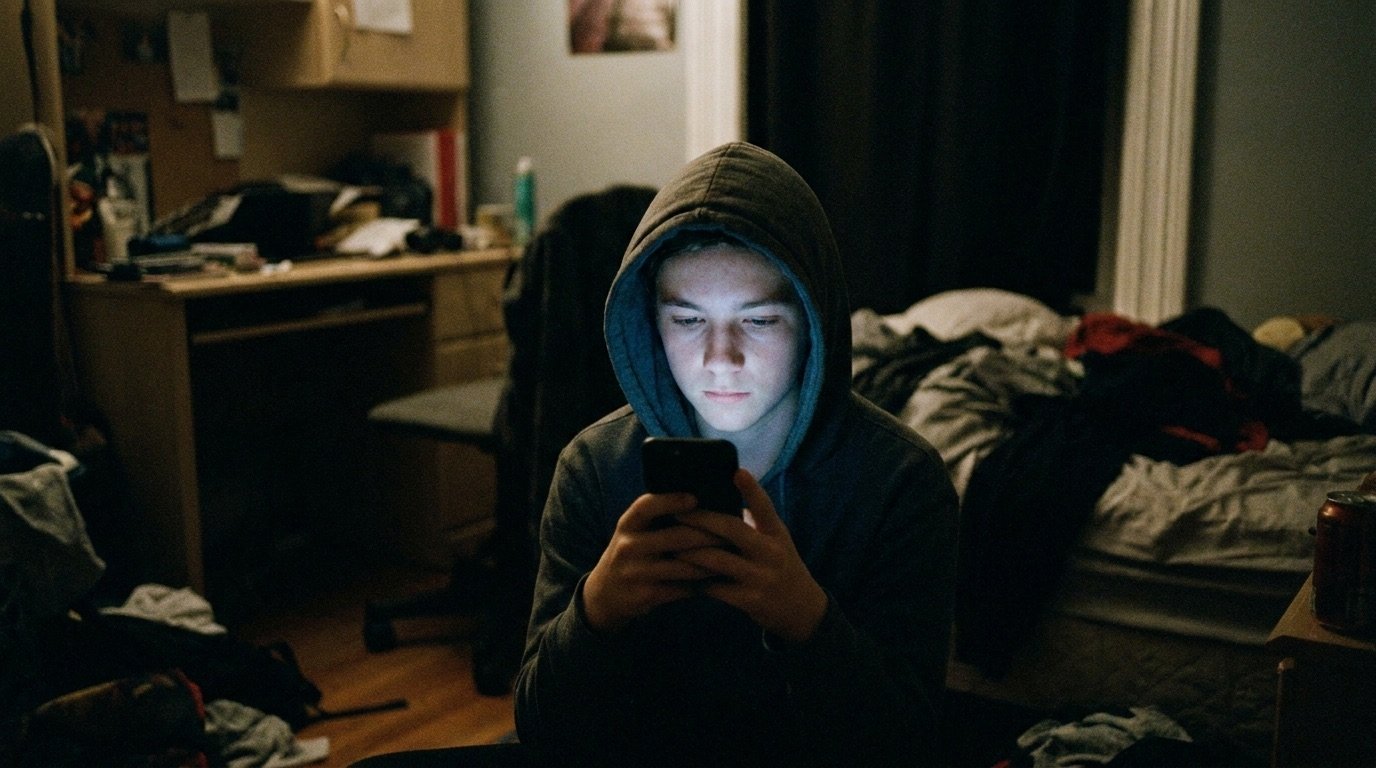
Every parent of a teenager knows the particular dread of the bedroom door that stays shut and the screen that never quite goes dark. So it is no surprise that ministers, having run a national consultation, are now moving towards restricting social media for the under-16s. The Prime Minister has been careful to draw a line: he is not, he insists, in favour of simply banning phones, which he calls impractical, but he does think there is a serious question about what children can actually access.
That distinction is more important than it first appears. Banning the device is a blunt instrument that punishes the bus timetable and the homework group along with the algorithm. Restricting the platforms aims at the thing most parents are genuinely worried about: the endless, engineered scroll that a parliamentary committee has described as addictive by design. On the principle, the government is closer to the public mood than its critics allow.
It is worth pausing on why that distinction matters so much. The smartphone has become, for better or worse, woven into the practical fabric of a teenager's life, from contacting parents to navigating public transport to accessing school resources. Treating the phone as the enemy confuses the tool with the problem. The concern is not the device in a child's pocket but the design of the services running on it, engineered to capture and hold attention for as long as possible.
The Australia comparison
Much of the debate has borrowed from Australia, which legislated for an under-16s social media ban and became the test case the rest of the world is watching. Supporters point to it as proof that the thing can be done; sceptics note that a law is only as good as its enforcement, and that age verification online has a long history of being trivially easy to dodge. A child with a borrowed birth date and a VPN is not a hypothetical. He is most children.
This is the uncomfortable core of the issue. The announcement is the easy part. Making it real means leaning hard on the technology companies, which have every commercial reason to verify ages loosely and to comply slowly. Britain has already given firms tight deadlines to block explicit images from children's phones; whether it has the appetite to fine and pursue them when they fall short is another matter entirely.
The Australian experiment is instructive precisely because it is unfinished. The legislation made headlines around the world, but the practical questions of how to verify ages reliably, how to handle the inevitable workarounds, and how to penalise non-compliance without driving children to more obscure and less regulated corners of the internet remain live. Any government borrowing the policy is also borrowing those unresolved problems.
- The government favours restricting platforms over banning phones outright
- Age verification online has a long record of being easy to circumvent
- Enforcement depends on the willingness to pursue and fine tech firms
- Australia's ban is the leading international test case, but unproven
- A poorly enforced rule risks pushing children to worse-policed spaces
“A child with a borrowed birth date and a VPN is not a hypothetical. He is most children.”
— Marcus Hadley
Background and context
Concern about the effect of social media on children's wellbeing has grown steadily, fuelled by research linking heavy use to anxiety, disrupted sleep and exposure to harmful content. Parliamentary committees and campaigners have pressed for stronger protections, and the Online Safety Act gave regulators new powers to hold platforms to account. The push for age restrictions is the latest stage in a wider effort to make the digital world safer for young people.
The technology companies, for their part, have introduced various parental controls and age-assurance measures, but critics argue these are often weak, easily bypassed and inconsistently applied. The fundamental tension is that the firms' business models depend on engagement, including from young users, which sits awkwardly with the goal of limiting children's access.
What we are really asking
There is also a quieter risk, which is that a ban lets the rest of us off the hook. It is comforting to imagine the problem can be legislated away, leaving parents, schools and the platforms themselves with nothing more to do. The evidence suggests otherwise. A rule that pushes children onto worse-policed corners of the internet, or simply teaches them to lie about their age, may feel like action while changing very little.
None of this is an argument for doing nothing. It is an argument for honesty about what a ban can and cannot achieve. If the government treats the announcement as the finish line, it will have written a headline, not a policy. If it treats it as the start of a long fight with some of the most powerful companies on earth, it might actually protect a few children. The difference will not be visible on the day of the speech. It will show up years later, in the data nobody is yet collecting.
Referenced coverage: Our reporting and analysis draws on coverage first reported by BBC News. The NE Times publishes original reporting and independent analysis written by our editorial team. We credit and link the outlets whose primary reporting informed this article.
The NE Times is an independent news and analysis publisher. Our articles combine factual reporting with clearly-written, impartial analysis. Content is for general information and does not constitute professional advice. Disclaimer.
You may also like to read
Opinion: A social media ban for under-16s is the easy part. Enforcing it honestly is the test
Banning under-16s from TikTok, Instagram and YouTube answers a real public anxiety, but a law the government cannot enforce risks becoming a comforting fiction that lets the platforms off the hook.
Parents back tougher screen rules as children embrace AI, polling shows
New government polling reveals strong public support for limits on young children's screen time and a possible social media ban for under-16s, even as surveys find a majority of children already using AI every day.
Government unveils sweeping ban on social media for under-16s
Snapchat, TikTok, Instagram and X will be off-limits to children under 16 under plans the prime minister says will give young people their childhood back.
Starmer prepares under-16s social media ban as tech firms given ultimatum
The Prime Minister is poised to restrict social media access for under-16s within days, warning technology companies to act on harmful content or face legislation.