No Glastonbury this summer as Worthy Farm takes its fallow year
Organiser Emily Eavis has confirmed there will be no festival in 2026, with the land resting before Glastonbury returns to Worthy Farm in June 2027.
Sophie Bennett
Writer ·

For the first time since 2018, there will be no Glastonbury Festival this summer. Organiser Emily Eavis has confirmed 2026 as a fallow year, a planned break that allows the land at Worthy Farm to recover after successive editions.
The pause means no headliners and no June crowds in Pilton this year, with the festival instead scheduled to return from 23 to 27 June 2027.
The absence leaves a conspicuous gap at the heart of the British summer, but it is a deliberate one, rooted in a long-standing practice that the festival's organisers consider essential to its survival.
Why the rest matters
Eavis has long argued that the periodic year off is essential to the site's sustainability, giving the ground time to regenerate and the farm's cattle space to roam. The break also offers the festival's organisers a chance to regroup ahead of a return edition.
Worthy Farm is, first and foremost, a working dairy farm, and the festival's scale places enormous strain on its land. Hundreds of thousands of attendees, temporary infrastructure and heavy footfall take a toll that a single winter cannot fully repair, which is why the fallow year exists as a recurring feature of the festival's calendar rather than a one-off.
“The fallow year is important because it gives the land a rest, it gives the cows a chance to be out longer and reclaim their land.”
— Emily Eavis
Beyond the agricultural rationale, the break serves practical and logistical purposes too, easing pressure on the local area and the army of staff, volunteers and suppliers who make the event possible. It also gives the organisers room to refresh the site and plan improvements ahead of the next edition.
What a fallow year means in practice
The consequences of a year off ripple outward from Worthy Farm, affecting fans, artists, the local economy and the wider festival landscape. The pause is felt well beyond the festival's own boundaries.
- No festival, headliners or June crowds at Worthy Farm in 2026
- Time for the land to regenerate and for the farm's cattle to roam more freely
- A pause for organisers to regroup and plan the return edition
- A scheduled return from 23 to 27 June 2027
- Ticketing details for 2027 expected later in 2026
- Line-up and headliner announcements likely in early 2027
For the broader live sector, a Glastonbury-free summer reshapes the season. Other festivals may find a little more room to attract acts and audiences, while fans accustomed to the Pilton pilgrimage look elsewhere for their summer fix. The gap underscores just how central the festival has become to the rhythm of the British music calendar.
Background: a recurring tradition
Fallow years are not new for Glastonbury; the festival has periodically taken them throughout its history, treating the rest as a non-negotiable part of operating an event of its size on agricultural land. The practice predates the modern, vastly expanded incarnation of the festival and reflects a continuity of stewardship under the Eavis family.
Each pause has been followed by a return that fans greet with renewed appetite, and the scarcity created by a year off tends to sharpen demand for the next edition's tickets. The 2027 return is likely to be no exception, with anticipation building across the intervening months.
Glastonbury has grown from its modest origins into one of the largest and most culturally significant festivals in the world, drawing enormous television audiences alongside the crowds at Worthy Farm. Its scale and prestige mean that a year without it is felt across the entire ecosystem of British live music, from the artists who covet its stages to the broadcasters who build summer schedules around it.
That cultural weight also raises the stakes for each return edition. With expectations running high after a year's absence, the 2027 festival will be under particular scrutiny, both for its line-up and for the condition of a site that will have spent twelve months recovering from the demands placed on it.
What happens next
Ticketing details for the 2027 return are expected later in 2026, with the line-up, including headliners, likely to be revealed in early 2027.
In the meantime, the rest does its quiet work at Worthy Farm. When the festival returns in June 2027, it will do so on recovered ground and with a fresh slate, ready to reclaim its place at the centre of the British summer after a year in which its absence will have been keenly felt.
Referenced coverage: Our reporting and analysis draws on coverage first reported by NME. The NE Times publishes original reporting and independent analysis written by our editorial team. We credit and link the outlets whose primary reporting informed this article.
The NE Times is an independent news and analysis publisher. Our articles combine factual reporting with clearly-written, impartial analysis. Content is for general information and does not constitute professional advice. Disclaimer.
You may also like to read
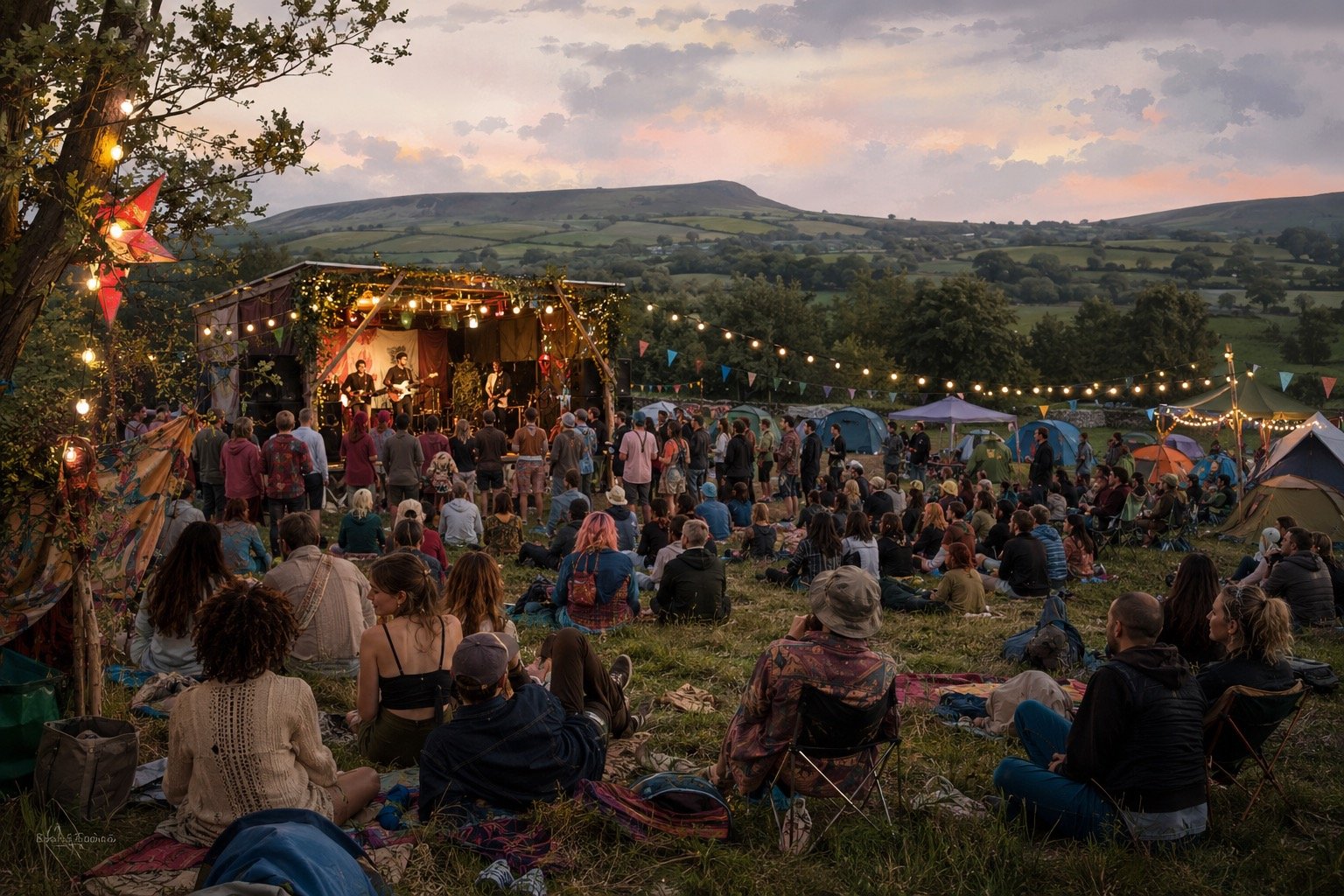
Tiny UK Festivals Draw the Crowds During Glastonbury's Fallow Year
With the festival giant on a break, grassroots events offering intimacy and eccentric line-ups are winning over fans seeking a less corporate experience.
iHeartRadio Music Festival reveals 2026 lineup with BTS, Cardi B and Muse
The two-night Las Vegas event returns to T-Mobile Arena in September with Capital One as presenting sponsor and a livestream split across Disney+ and Hulu.

Streaming calendar crowds as films, series, music and games fight for the same week
A packed release slate shows how entertainment platforms increasingly compete across categories, with viewers asked to treat one week as a full media menu.

Camille returns with a triple album on motherhood and grief
The French experimental singer frames her ambitious new record around motherhood, loss and the sense that the wider world is in pain.