Albania's Coastline Becomes Political Battleground as Resort Protests Swell
Demonstrations against luxury developments tied to Jared Kushner and Ivanka Trump have grown into a wider reckoning over corruption, the environment and who shapes Albania's future.
Marcus Reeve
Writer ·
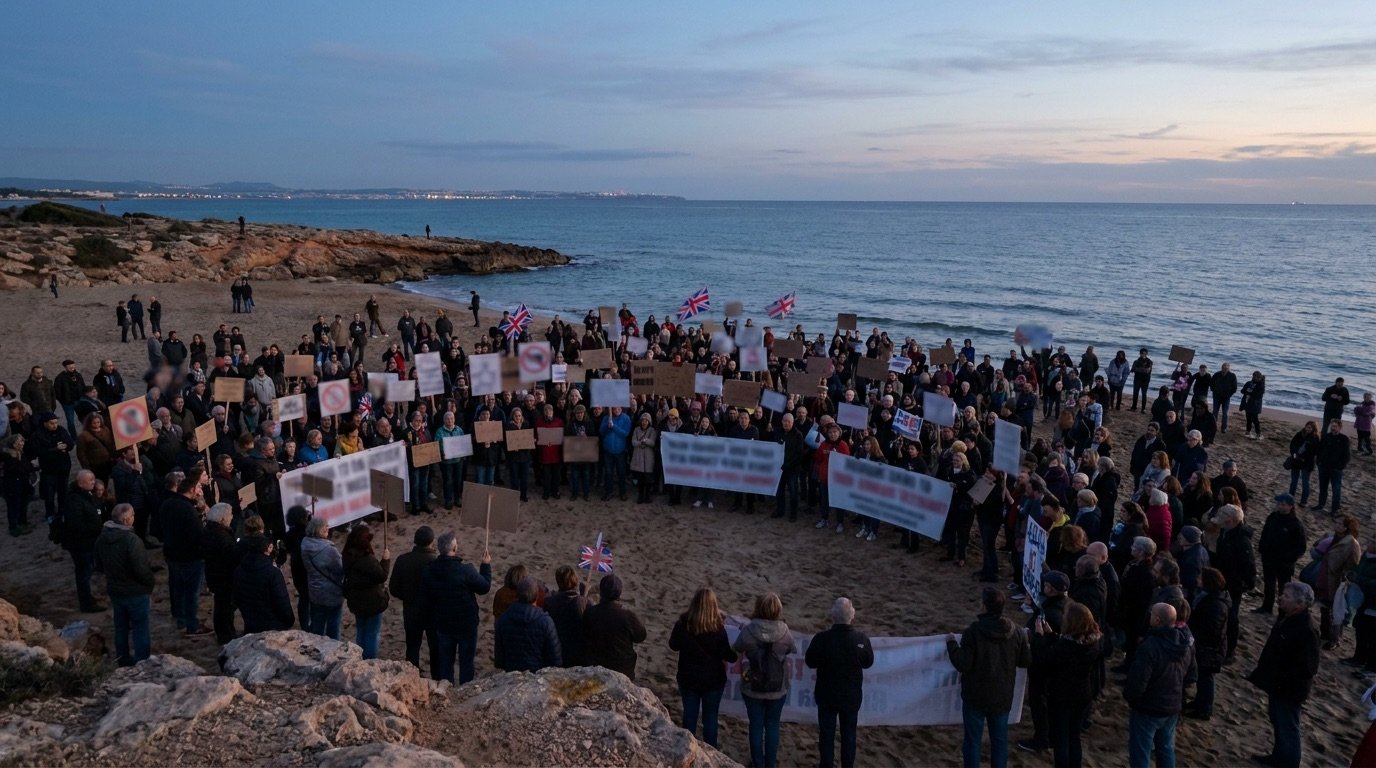
A dispute over luxury tourism schemes linked to Jared Kushner and Ivanka Trump has hardened into one of the most significant political challenges yet faced by Albania's prime minister, Edi Rama.
What began as a localised objection to building on protected stretches of the Adriatic coast has broadened into a national argument about accountability, foreign capital and the kind of country Albania wants to become as it pursues closer ties with Europe.
At the centre of the row are plans affecting Sazan Island and the protected Zvernec peninsula, where campaigners say large-scale construction risks fragile habitats, public access to the shore and the country's longer-term environmental interests.
A flamingo as the face of dissent
The movement has adopted the flamingo as an unlikely emblem, a nod to the birdlife that gathers along the affected coastal wetlands. The imagery has spread quickly online, helping to draw younger Albanians and members of the diaspora into a cause that initially looked narrowly ecological.
For many of those marching, the wildlife is shorthand for a broader complaint: that decisions about the coastline are being taken behind closed doors, with outside investors set to gain while communities and protected landscapes absorb the cost.
Investment opportunity or elite capture?
The developments are backed by Affinity Partners, Kushner's investment firm, and Rama has defended them as a rare economic opportunity. Supporters argue that high-end tourism could generate jobs and quicken the pace of national development.
Opponents tell a different story. They accuse the government of placing prestige projects ahead of public scrutiny, and of treating environmental safeguards as obstacles rather than obligations.
“What began as an objection to a building site has turned into a question about who is allowed to decide the country's future.”
International pressure mounts
The controversy has reached beyond Albania's borders. A European Parliament resolution has urged caution over construction in protected zones, adding diplomatic weight to the campaigners' demands at a delicate moment in the country's bid for deeper European integration.
The protests may not halt the projects on their own. But they have already changed the political meaning of the development, transforming an environmental grievance into a wider debate about corruption and democratic control of the coast.
Referenced coverage: Our reporting and analysis draws on coverage first reported by The Guardian. The NE Times publishes original reporting and independent analysis written by our editorial team. We credit and link the outlets whose primary reporting informed this article.
The NE Times is an independent news and analysis publisher. Our articles combine factual reporting with clearly-written, impartial analysis. Content is for general information and does not constitute professional advice. Disclaimer.
You may also like to read

Bolivia Reopens Roads Under Emergency Powers as Patrol Plane Crash Kills Six
President Rodrigo Paz's state of emergency has eased crippling blockades, but a fatal air force crash and unresolved tensions in Evo Morales's heartland keep the country on edge.

Gatwick expansion gains momentum as campaigners lose court battle
A ruling against opponents of the airport's growth plans has reinvigorated a contested infrastructure scheme, even as arguments over noise, emissions and capacity remain firmly alive.
MPs to debate full fracking ban as energy and environment clash
A Commons debate will weigh the environmental, economic and energy security arguments over whether to close loopholes in the UK's fracking moratorium.
Nine councils stripped of planning powers over major developments
Housing minister Matthew Pennycook has placed nine local authorities in planning 'special measures', allowing developers to bypass them and apply directly to the Planning Inspectorate for large schemes.